…what you receive with trust is your one verse or your one phrase. Do not try to understand eighty thousand verses or phrases… ~ DÅgen Zenji
Study Hall – Shobogenzo –
Friday, March 11, 2011
“Know that as there are many aspects within the treasury of the true dharma eye, you cannot fully clarify it. Yet the treasury of the true dharma eye is expounded. There is no way you cannot have trust in it. Buddha sutras are like this. There are a number of them, but what you receive with trust is your one verse or your one phrase. Do not try to understand eighty thousand verses or phrases…”
– The Ino’s Blog (San Francisco Zen Center)
“Ino” means “director of the meditation hall; supervises, attends, and assigns staffing for all sesshines and ceremonies.” The ino leads the chanting service and recites the dedication of service…
æ£æ³ç¼èµ
ShÅbÅgenzÅ
(lit. “Treasury of the True Dharma Eye”) The term ShÅbÅgenzÅ has three main usages in Buddhism: (1) It can refer to the essence of the Buddha’s realization and teaching, that is, to the Buddha Dharma itself, as viewed from the perspective of Mahayana Buddhism, (2) it is the title of a koan collection with commentaries by Dahui Zonggao, and (3) it is used in the title of two works by Dogen Kigen… (more @Wikipedia)

Photograph of the title page of the Edition Honzanban (1811) of DÅgen’s ShÅbÅgenzÅ
Dogen’s Two ShÅbÅgenzÅs
In Japan and the West, the term ShÅbÅgenzÅ is most commonly known as referring to the titles of two works composed by Japanese Zen master DÅgen Kigen in the mid-13th century.
The first, written and completed in 1235, the Shinji ShÅbÅgenzÅ, also known as the Mana ShÅbÅgenzÅ or ShÅbÅgenzÅ Sanbyakusoku, is a collection of 301 koans (public cases) and is written in Chinese, the language of the original texts from which the koans were taken. In this DÅgen was content simply to record the stories without interjecting his own remarks. A few years later, however, he embarked on a major project to develop extended commentaries on many of these and other passages from the Ch’an literature. The fruit of this project was his masterpiece–the remarkable collection of essays known as the kana, or “vernacular”, ShÅbÅ genzÅ.
éå ç¦ å¸«
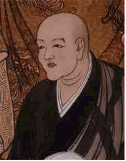
DÅgen Zenji (also DÅgen Kigen éå å¸ç, or Eihei DÅgen 永平éå , or Koso Joyo Daishi) (19 January 1200 â 22 September 1253) was a Japanese Zen Buddhist teacher born in KyÅto, and the founder of the SÅtÅ school of Zen in Japan after travelling to China and training under the Chinese Caodong lineage there. DÅgen is known for his extensive writing including the Treasury of the Eye of the True Dharma or ShÅbÅgenzÅ, a collection of ninety-five fascicles concerning Buddhist practice and enlightenment.The later Kana ShÅbÅgenzÅ consists of an overlapping assortment of essays and commentaries written in Japanese; different versions of the Kana ShÅbÅgenzÅ contain different sets of texts. (See: Heine, Dogen and the Koan Tradition)
When referring to Dogen’s works, the term ShÅbÅgenzÅ by itself more commonly refers to the Kana ShÅbÅgenzÅ.
Study Hall – Shobogenzo
Friday, March 25, 2011
‘Face-to-Face Transmission’, ‘Menju’, is a lot of fun; Dogen gets personal, both for himself, and with an ad hominem section in the postscript:
If you do not realize the fruit at this moment, when will you realize it?
If you do not cut off delusion at this moment, when will you cut off delusion?
If you do not become a buddha at this moment, when will you?
If you do not sit as a buddha at this moment, when will you practice as an active buddha
Diligently examine this in detail…
TAG THIS PHOTO
see also –
• ShÅbÅgenzÅ @Wikipedia
• Shobogenzo links at “Hey Bro! Can You Spare Some Change?” (top of right column)
• diamond sutra at whats more blog
• dharma wheel at whats more blog
• more about Buddhism at whats more blog
• The Ino’s Blog: Counting To Nine | Zen Mind, Beginner’s Mind at whats more blog