
J. R. “Bob” Dobbs is the figurehead of the Church of the SubGenius. His image is derived from a piece of 1950s clip art. According to SubGenius dogma, “Bob” was a drilling equipment salesman who, in 1953, saw a vision of God (JHVH-1 according to Church scriptures) on a television set he had built himself. The vision inspired him to write the “PreScriptures” (as described in the Book of the SubGenius) and found the Church. The theology holds that “Bob” is the greatest salesman who ever lived, and has cheated death a number of times. He is also revered for his great follies and believed to be a savior of “slack”. He was assassinated in San Francisco in 1984, though the Church states that he has come back from the dead several times since then.
The quotation marks in “Bob’s” name are always included when spelling his name, according to the Church. According to Revelation X; The “Bob” Apocryphon, “Bob” was born in Dallas, Texas, to Xinucha-Chi-Xan M. Dobbs (a pharmacist) and Jane McBride Dobbs. At an early age he possessed a talent for making large amounts of money by playing the stock market over the telephone. He married his wife Connie in Las Vegas in 1955 and worked as a photographer’s model while inventing and patenting novelty gag items. In 1957 he worked weekends doing Evangelical Christian preaching “strictly for the money”. (read more)

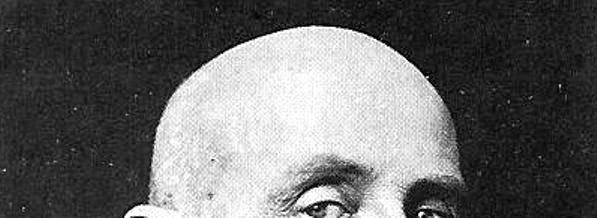

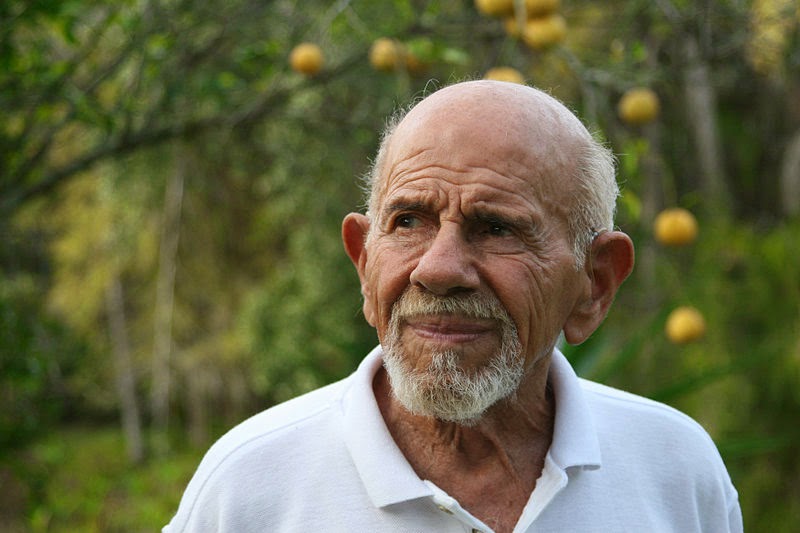



Photograph of Diane Arbus by Allan Arbus
(a film test), c. 1949
Diane Arbus (March 14, 1923 â July 26, 1971) was an American photographer and writer noted for black-and-white square photographs of “deviant and marginal people (dwarfs, giants, transvestites, nudists, circus performers) or else of people whose normality seems ugly or surreal.” A friend said that Arbus said that she was “afraid… that she would be known simply as the photographer of freaks”; however, that term has been used repeatedly to describe her.
In 1972, a year after she committed suicide, Arbus became the first American photographer to have photographs displayed at the Venice Biennale. Millions of people viewed traveling exhibitions of her work in 1972-1979. In 2003-2006, Arbus and her work were the subjects of a another major traveling exhibition, Diane Arbus Revelations. In 2006, the motion picture Fur, starring Nicole Kidman as Arbus, presented a fictional version of her life story.
Although some of Arbus’s photographs have sold for hundreds of thousands of dollars at auction, Arbus’s work has provoked controversy; for example, Norman Mailer was quoted in 1971 as saying “Giving a camera to Diane Arbus is like putting a live grenade in the hands of a child.”
Arbus experienced “depressive episodes” during her life similar to those experienced by her mother, and the episodes may have been worsened by symptoms of hepatitis. Arbus wrote in 1968 “I go up and down a lot,” and her ex-husband noted that she had “violent changes of mood.” On July 26, 1971, while living at Westbeth Artists Community in New York City, Arbus took her own life by ingesting barbiturates and slashing her wrists with a razor. Marvin Israel found her body in the bathtub two days later; she was 48 years old.
(read more) (photographs) (movie trailer)

Harry Houdini (born Erik Weisz; March 24, 1874 â October 31, 1926) was a Hungarian-born American magician and escapologist, stunt performer, actor and film producer noted for his sensational escape acts. Harry Houdini died on Halloween. (read more)

The Persistence of Memory
by Salvador Dali
1931
Salvador Domingo Felipe Jacinto Dalà i Domènech, Marquis of Dalà de Púbol (May 11, 1904 â January 23, 1989), commonly known as Salvador Dali , was a prominent Spanish Catalan surrealist painter born in Figueres.
Dalà was a skilled draftsman, best known for the striking and bizarre images in his surrealist work. His painterly skills are often attributed to the influence of Renaissance masters. His best-known work, The Persistence of Memory, was completed in 1931. DalÒs expansive artistic repertoire includes film, sculpture, and photography, in collaboration with a range of artists in a variety of media.
Dalà attributed his “love of everything that is gilded and excessive, my passion for luxury and my love of oriental clothes” to a self-styled “Arab lineage,” claiming that his ancestors were descended from the Moors.
Dalà was highly imaginative, and also had an affinity for partaking in unusual and grandiose behavior, in order to draw attention to himself. This sometimes irked those who loved his art as much as it annoyed his critics, since his eccentric manner sometimes drew more public attention than his artwork. (read more)

(say this and become powerful)
“I want to help you…
you just tell me what you need…
and I’ll be happy to do it”
 Among the works created by Leonardo da Vinci in the 1500s is the small portrait known as the Mona Lisa or “la Gioconda”, the laughing one. In the present era it is arguably the most famous painting in the world. Its fame rests, in particular, on the elusive smile on the woman’s face, its mysterious quality brought about perhaps by the fact that the artist has subtly shadowed the corners of the mouth and eyes so that the exact nature of the smile cannot be determined. The shadowy quality for which the work is renowned came to be called “sfumato” or Leonardo’s smoke. Vasari, who is generally thought to have known the painting only by repute, said that “the smile was so pleasing that it seemed divine rather than human; and those who saw it were amazed to find that it was as alive as the original”.
Other characteristics found in this work are the unadorned dress, in which the eyes and hands have no competition from other details, the dramatic landscape background in which the world seems to be in a state of flux, the subdued colouring and the extremely smooth nature of the painterly technique, employing oils, but laid on much like tempera and blended on the surface so that the brushstrokes are indistinguishable. Vasari expressed the opinion that the manner of painting would make even “the most confident master … despair and lose heart.” The perfect state of preservation and the fact that there is no sign of repair or overpainting is extremely rare in a panel painting of this date. (read more)

Leonardo di ser Piero da Vinci
(April 15, 1452 â May 2, 1519)