

Godzilla (ã´ã¸ã©, Gojira) is a daikaijÅ«, a Japanese movie monster, first appearing in IshirÅ Honda’s 1954 film Godzilla. With the bombings of Hiroshima and Nagasaki still fresh in the Japanese consciousness, Godzilla was conceived as a monster created by nuclear detonations and a metaphor for nuclear weapons in general.
Although his origins vary somewhat from film to film, he is always described as a prehistoric creature, who first appeared and attacked Japan at the beginning of the Atomic Age. In particular, mutation due to atomic radiation is presented as an explanation for his size and powers. The most notable of Godzilla’s resulting abilities is his atomic breath: a powerful heat ray of fire from his mouth.
Godzilla is one of the most recognizable symbols of Japanese popular culture worldwide and remains an important facet of Japanese films, embodying the kaiju subset of the tokusatsu genre. He has been considered a filmographic metaphor for the United States, as well as an allegory of nuclear weapons in general. The earlier Godzilla films, especially the original, portrayed Godzilla as a frightening, nuclear monster. Godzilla represented the fears that many Japanese held about the nuclear attacks on Hiroshima and Nagasaki, and the possibility of recurrence. (read more)


The Space Shuttle Challenger disaster occurred on Tuesday, January 28, 1986, when Space Shuttle Challenger broke apart 73 seconds into its flight, leading to the deaths of its seven crew members. The spacecraft disintegrated over the Atlantic Ocean, off the coast of central Florida, United States, at 11:38 a.m. EST (16:38 UTC).

Disintegration of the entire vehicle began after an O-ring seal in its right solid rocket booster (SRB) failed at liftoff. The O-ring failure caused a breach in the SRB joint it sealed, allowing pressurized hot gas from within the solid rocket motor to reach the outside and impinge upon the adjacent SRB attachment hardware and external fuel tank. This led to the separation of the right-hand SRB’s aft attachment and the structural failure of the external tank. Aerodynamic forces promptly broke up the orbiter.
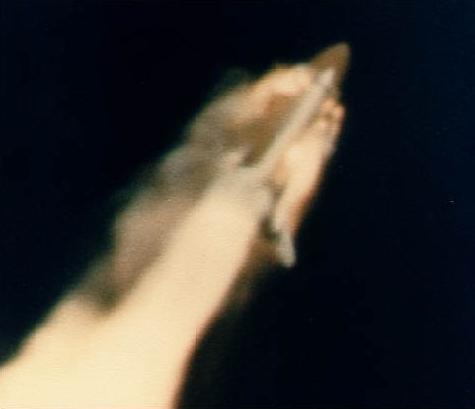
The crew compartment and many other vehicle fragments were eventually recovered from the ocean floor after a lengthy search and recovery operation. Although the exact timing of the death of the crew is unknown, several crew members are known to have survived the initial breakup of the spacecraft. However, the shuttle had no escape system and the astronauts did not survive the impact of the crew compartment with the ocean surface.

The disaster resulted in a 32-month hiatus in the shuttle program and the formation of the Rogers Commission, a special commission appointed by United States President Ronald Reagan to investigate the accident. The Rogers Commission found that NASA’s organizational culture and decision-making processes had been a key contributing factor to the accident. NASA managers had known that contractor Morton Thiokol’s design of the SRBs contained a potentially catastrophic flaw in the O-rings since 1977, but they failed to address it properly. They also disregarded warnings from engineers about the dangers of launching posed by the low temperatures of that morning and had failed to adequately report these technical concerns to their superiors. The Rogers Commission offered NASA nine recommendations that were to be implemented before shuttle flights resumed. (read more)

Tsunami by Hokusai 19th Century
A tsunami (Japanese: “harbor wave”; English pronunciation: / tsoo-NAH-mee) is a series of water waves (also called a tsunami wave train) caused by the displacement of a large volume of a body of water, usually an ocean, though it can occur in large lakes. Tsunamis are a frequent occurrence in Japan; approximately 195 events have been recorded. Owing to the immense volumes of water and the high energy involved, tsunamis can devastate coastal regions.
Earthquakes, volcanic eruptions and other underwater explosions (including detonations of underwater nuclear devices), landslides and other mass movements, meteorite ocean impacts or similar impact events, and other disturbances above or below water all have the potential to generate a tsunami.
The Greek historian Thucydides was the first to relate tsunami to submarine earthquakes, but the understanding of a tsunami’s nature remained slim until the 20th century and is the subject of ongoing research. Many early geological, geographical, and oceanographic texts refer to tsunamis as “seismic sea waves.” (read more)

Einstein said, “The splitting of the atom changed everything save man’s mode of thinking; thus we drift towards unparalleled catastrophe.” He also said, “Nuclear power is a hell of a way to boil water.”
The “outer building” surrounding Unit 3 of Fukushima I explodes, presumably due to the ignition of built up hydrogen gas, on March 13, 2011. This is the reactor which has the extremely dangerous plutonium-laced MOX fuel. State of the nuclear reactor core remains unknown…
variations at whats more
the file is suitable for 4×6 high resolution photo prints – please print some and pass them around – no nukes!
fukushima nuclear disaster updates at “whats up”
NO NUKES | RE-TOOL NOW


The Hindenburg disaster took place on Thursday, May 6, 1937, as the German passenger airship LZ 129 Hindenburg caught fire and was destroyed during its attempt to dock with its mooring mast at the Lakehurst Naval Air Station, which is located adjacent to the borough of Lakehurst, New Jersey. Of the 97 people on board (36 passengers, 61 crew), there were 35 fatalities; there was also one death among the ground crew.
The disaster was the subject of spectacular newsreel coverage, photographs, and Herbert Morrison’s recorded radio eyewitness report from the landing field, which was broadcast the next day. The actual cause of the fire remains unknown, although a variety of hypotheses have been put forward for both the cause of ignition and the initial fuel for the ensuing fire. The incident shattered public confidence in the giant, passenger-carrying rigid airship and marked the end of the airship era. (read more)


Donate to the
Japanese Red Cross Society
with Google Crisis Response.
http://www.google.com/crisisresponse/japanquake2011.html


The most powerful flare ever observed was the first one to be observed, on September 1, 1859, and was reported by British astronomer Richard Carrington and independently by an independent observer named Richard Hodgson. The event is named the Solar storm of 1859, or the “Carrington event”. The flare was visible to a naked-eye (in white light), and produced stunning auroras down to tropical latitudes such as Cuba or Hawaii. The flare left a trace in Greenland ice in the form of nitrates and beryllium-10, which allow its strength to be measured today (New Scientist, 2005). Cliver & Salvgaard (2004) reconstructed the effects of this flare and compared with other events of the last 150 years. In their words: While the 1859 event has close rivals or superiors in each of the above categories of space weather activity, it is the only documented event of the last 150 years that appears at or near the top of all of the lists.
On September 1â2, 1859, the largest recorded geomagnetic storm occurred. Aurorae were seen around the world, most notably over the Caribbean; also noteworthy were those over the Rocky Mountains that were so bright that their glow awoke gold miners, who began preparing breakfast because they thought it was morning. Telegraph systems all over Europe and North America failed in some cases even shocking telegraph operators. Telegraph pylons threw sparks and telegraph paper spontaneously caught fire. Some telegraph systems appeared to continue to send and receive messages despite having been disconnected from their power supplies.
The last solar maximum was in 2000. The next solar maximum is currently predicted to occur sometime between January and May 2013 and to be one of the weakest cycles since 1928. The unreliability of solar maxima is demonstrated in that NASA had previously predicted the solar maximum for 2010/2011 and possibly to occur as late as 2012. Previously, on March 10, 2006, NASA researchers had announced that the next solar maximum would be the strongest since the historic maximum in 1859 in which the northern lights could be seen as far south as Rome, approximately 42° north of the equator. (read more)
The next solar max could be powerful enough to knock out electric power grids around the world for months or even longer.
(space storm)
The Space Shuttle Challenger disaster occurred on Tuesday, January 28, 1986, when Space Shuttle Challenger broke apart 73 seconds into its flight, leading to the deaths of its seven crew members. The spacecraft disintegrated over the Atlantic Ocean, off the coast of central Florida, United States, at 11:38 a.m. EST (16:38 UTC).
Disintegration of the entire vehicle began after an O-ring seal in its right solid rocket booster (SRB) failed at liftoff. The O-ring failure caused a breach in the SRB joint it sealed, allowing pressurized hot gas from within the solid rocket motor to reach the outside and impinge upon the adjacent SRB attachment hardware and external fuel tank. This led to the separation of the right-hand SRB’s aft attachment and the structural failure of the external tank. Aerodynamic forces promptly broke up the orbiter.
The crew compartment and many other vehicle fragments were eventually recovered from the ocean floor after a lengthy search and recovery operation. Although the exact timing of the death of the crew is unknown, several crew members are known to have survived the initial breakup of the spacecraft. However, the shuttle had no escape system and the astronauts did not survive the impact of the crew compartment with the ocean surface.
The disaster resulted in a 32-month hiatus in the shuttle program and the formation of the Rogers Commission, a special commission appointed by United States President Ronald Reagan to investigate the accident. The Rogers Commission found that NASA’s organizational culture and decision-making processes had been a key contributing factor to the accident. NASA managers had known that contractor Morton Thiokol’s design of the SRBs contained a potentially catastrophic flaw in the O-rings since 1977, but they failed to address it properly. They also disregarded warnings from engineers about the dangers of launching posed by the low temperatures of that morning and had failed to adequately report these technical concerns to their superiors. The Rogers Commission offered NASA nine recommendations that were to be implemented before shuttle flights resumed. (read more)

USS Arizona (BB-39) was a Pennsylvania-class battleship of the United States Navy and the first to be named “Arizona”. On March 4, 1913, Congress authorized the construction of Arizona, named to honor the 48th state’s admission into the union on 14 February 1912. The ship was the second and last of the Pennsylvania class of “super-dreadnought” battleships.
She is most remembered because of her sinking, with the loss of 1,177 lives, during the Japanese attack on Pearl Harbor on 7 December 1941, the event that goaded the US into World War II. Unlike most of the other ships sunk or damaged that day, the Arizona could not be salvaged, although the U.S. Navy removed several elements of the ship that were reused. The wreck still lies at the bottom of Pearl Harbor and was established as a memorial to all those who died during the Pearl Harbor attack. (read more)

“hip hip hooray”
Chilean rescuers moving at a rapid pace pressed ahead with the operation to free 33 men trapped half a mile below the earth’s surface for more than two months.
Rescuers freed the 27th miner as family members and hundreds of international media held vigil. The pace of the rescues quickened throughout the day, with some men rising to safety within 30 minutes of each other.
The 26th miner rescued, Claudio Acuña, 34, has worked in mining about 10 years. According to CNN, he’s married, has a daughter and is the youngest of eight brothers.
“We have lived a magical night, a night we will remember throughout our lives, a night in which life defeated death,” declared Chilean President Sebastian Piñera, who welcomed the miners as they emerged from the rescue pod one at a time. (latimes)


Jacques-Yves Cousteau
(11 June 1910 â 25 June 1997)
was a French naval officer, explorer, ecologist,
filmmaker, innovator, scientist, photographer, author and
researcher who studied the sea and all forms of life in water.
He co-developed the aqua-lung,
pioneered marine conservation and
was a member of the Académie française.
He was commonly known as “le Commandant Cousteau”
or “Captain Cousteau”.
Happy 100th birthday,
from the people of earth.

Ahh Ha Haa Haaa…
You want oil ???
I’ll give you oil !!!
