


We will all get old


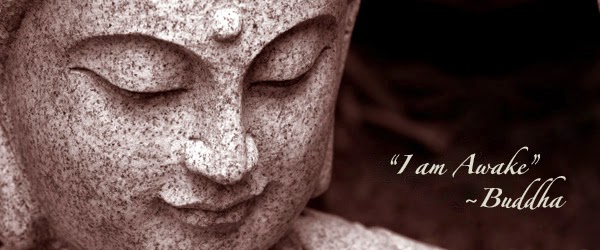


first verse –
“As all things are buddha-dharma, there is delusion and realization, practice, and birth and death, and there are buddhas and sentient beings.
As the myriad things are without an abiding self, there is no delusion, no realization, no buddha, no sentient being, no birth and death.
The buddha way is, basically, leaping clear of the many and the one; thus there are birth and death, delusion and realization, sentient beings and buddhas.
Yet in attachment blossoms fall, and in aversion weeds spread.”
“The depth of the drop is the height of the moon”
Genjo Koan is perhaps the best known section of Eihei Dogenâs masterwork, Shobogenzo (Treasury of the True Dharma Eye).
éå ç¦ å¸«
• DÅgen Zenji (also DÅgen Kigen éå å¸ç, or Eihei DÅgen 永平éå , or Koso Joyo Daishi) (19 January 1200 â 22 September 1253) was a Japanese Zen Buddhist teacher born in KyÅto, and the founder of the SÅtÅ school of Zen in Japan after travelling to China and training under the Chinese Caodong lineage there. DÅgen is known for his extensive writing including the Treasury of the Eye of the True Dharma or ShÅbÅgenzÅ, a collection of ninety-five fascicles concerning Buddhist practice and enlightenment.

links / see also
• whats more: The Ino's Blog: Study Hall – Shobogenzo
“(lit. ‘Treasury of the True Dharma Eye‘) The term ShÅbÅgenzÅ has three main usages in Buddhism: (1) It can refer to the essence of the Buddha’s realization and teaching, that is, to the Buddha Dharma itself, as viewed from the perspective of Mahayana Buddhism, (2) it is the title of a koan collection with commentaries by Dahui Zonggao, and (3) it is used in the title of two works by Dogen Kigen…”
• Dogen Zengi at Sotoshu
• ShÅbÅgenzÅ (@Wikipedia)
• Shobogenzo links (@”Hey Bro! Can You Spare Some Change?”) (top of right column)
• whats more: buddha art
• whats more: diamond sutra art
• whats more: dharma wheel art
• whats more: …about Zen & Buddhism
• whats more: The Ino’s Blog: Counting To Nine | Zen Mind, Beginner’s Mind

Siddhartha resisted every temptation Mara could devise. The lord of desire had one final test. He demanded to know who would testify that Siddhartha was worthy of attaining ultimate wisdom. And his demon army rose up to support him. Siddhartha said nothing. He reached down and touched the ground, and the earth shuddered. Maraâs demons fled.
earth touching
This gesture calls upon the earth to witness Shakyamuni Buddha’s enlightenment at Bodh Gaya. The right hand reaches toward the ground, palm inward.
मà¥à¤¦à¥à¤°à¤¾
A mudrÄ (Sanskrit: मà¥à¤¦à¥à¤°à¤¾ “seal”, “mark”, or “gesture”) is a symbolic or ritual gesture in Hinduism and Buddhism. While some mudrÄs involve the entire body, most are performed with the hands and fingers. A mudrÄ is a spiritual gesture and an energetic seal of authenticity employed in the iconography and spiritual practice of Indian religions and traditions of Dharma and Taoism.
TheBuddhaPBS’s Channel – THE BUDDHA: Enlightenment, part 3
whats more: Bhumisparsha MudrÄ | Young Urban Zen | Dalai Lama | Science meets Buddhism
happy birthday 🙂
whats more: The Ino’s Blog: Counting To Nine | Zen Mind, Beginner’s Mind

~ Shunryu Suzuki Roshi
The Ino's Blog: Counting To Nine
Wednesday, May 11, 2011
Counting To Nine
I bought myself another copy of Zen Mind, Beginner’s Mind, and I was looking for the explanation of why we do nine prostrations at the beginning of morning service instead of three, which I have heard here many times over the years: Suzuki Roshi thought American students were more stubborn than Japanese and needed more help in letting go of the ego.
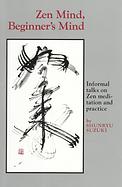
Zen Mind, Beginner’s Mind is a book of teachings by the late Shunryu Suzuki, a compilation of talks given to his satellite Zen center in Los Altos, California. Published in 1970 by Weatherhill, the book is not academic. These are frank and direct transcriptions of Suzukis’ talks recorded by his student Marian Derby. Trudy Dixon and Richard BakerâBaker was Suzuki’s successorâedited the talks by choosing those most relevant, arranging them into chapters. According to some, it has become a spiritual classic, helping readers to steer clear from the trappings of intellectualism.
In the book we read,
‘After zazen we bow to the floor nine times. By bowing, we are giving up ourselves. To give up ourselves means to give up our dualistic ideas. So there is no difference between zazen practice and bowing. Usually to bow means to pay our respects to something which is more worthy of respect than ourselves. But when you bow to Buddha you should have no idea of Buddha, you just become one with Buddha, you are already Buddha yourself.’
– These last two sentences are ones I should probably memorise, as I often find myself answering a question around this from new students or visiting high school kids – if there is no god in Buddhism, why are you bowing, who are you bowing to?” ~ more
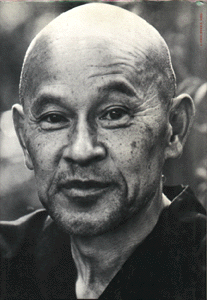
Shunryu Suzuki (é´æ¨ ä¿é Suzuki ShunryÅ«, dharma name ShÅgaku ShunryÅ« 祥岳ä¿é) (May 18, 1904 â December 4, 1971) was a SÅtÅ Zen roshi (Zen Master) who popularized Zen Buddhism in the United States, particularly around San Francisco. Born in the Kanagawa Prefecture of Japan, Suzuki was occasionally mistaken for the Zen scholar D.T. Suzuki, to which Shunryu would reply, “No, he’s the big Suzuki, I’m the little Suzuki.”
Suzuki Roshi dot org (suzukiroshi.org)
Shunryu Suzuki Roshi on YouTube
The purpose of San Francisco Zen Center is to make accessible and embody the wisdom and compassion of the Buddha as expressed in the Soto Zen tradition established by Dogen Zenji in 13th-century Japan and conveyed to us by Suzuki Roshi and other Buddhist teachers. Our practice flows from the insight that all beings are Buddha, and that sitting in meditation is itself the realization of Buddha nature, or enlightenment.
~ by Shunryu Suzuki Roshi
• Shunryu Suzuki-roshi, a Japanese Zen priest belonging to the Soto lineage, came to San Francisco in 1959 at the age of fifty-four. Already a respected Zen master in Japan, he was impressed by the seriousness and quality of “beginner’s mind” among Americans he met who were interested in Zen and decided to settle here. As more and more people of non-Japanese background joined him in meditation, Zen Center came into being and he was its first abbot. Under his tutelage, Zen Center grew into City Center, Green Gulch Farm and Tassajara Zen Mountain Center. He was undoubtedly one of the most influential Zen teachers of his time.
“In the beginner’s mind there are many possibilities, but in the expert’s there are few.”
So begins this most beloved of all American Zen books. Seldom has such a small handful of words provided a teaching as rich as has this famous opening line of Shunryu Suzuki’s classic. In a single stroke, the simple sentence cuts through the pervasive tendency students have of getting so close to Zen as to completely miss what it’s all about. An instant teaching on the first page. And that’s just the beginning. In the thirty years since its original publication, Zen Mind, Beginner’s Mind has become one of the great modern Zen classics, much beloved, much re-read, and much recommended as the best first book to read on Zen. Suzuki Roshi presents the basicsâfrom the details of posture and breathing in zazen to the perception of nondualityâin a way that is not only remarkably clear, but that also resonates with the joy of insight from the first to the last page. It’s a book to come back to time and time again as an inspiration to practice.
Purchase Zen Mind, Beginner’s Mind from Zen Center’s on-line bookstore.
SOTOZEN-NET official site (english)
ZEN playlist @ rc’s youtube channel
TAG THIS PHOTO
see also:
Master of the Shakuhachi & about Zen & Buddhism