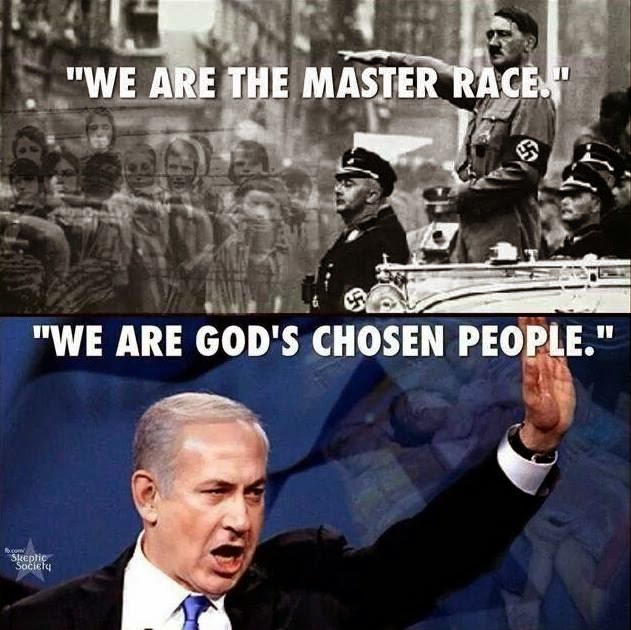
“Everything is racist to liberals, but blacks can’t be racist because they’re always the “victim” of racism, they say. And racism “always” comes from white people who are seen as the cause of all of society’s problems.”
―


Martin Luther King, Jr., a prominent American leader of the African-American civil rights movement and Nobel Peace Prize laureate, was assassinated at the Lorraine Motel in Memphis, Tennessee, on April 4, 1968, at the age of 39. (read more)

On his way from a convenience store with an ice tea and a bag of skittles, Trayvon Martin was headed to his fathers girlfriends apartment when George Zimmerman followed and questioned Trayvon, what happened next was an example of suspicion, fear and racism followed by the killing of Trayvon Martin, a 17 year old kid. (read more)

The Nanking Massacre or Nanjing Massacre, also known as the Rape of Nanking, was a mass murder, and war rape that occurred during the six-week period following the Japanese capture of the city of Nanjing (Nanking), the former capital of the Republic of China, on December 13, 1937 during the Second Sino-Japanese War. During this period hundreds of thousands of Chinese civilians and disarmed soldiers were murdered by soldiers of the Imperial Japanese Army. Widespread rape and looting also occurred. Historians and witnesses have estimated that 250,000 to 300,000 people were killed. Several of the key perpetrators of the atrocities, at the time labelled as war crimes, were later tried and found guilty at the Nanjing War Crimes Tribunal, and were subsequently executed. Another key perpetrator, Prince Asaka, a member of the Imperial Family, escaped prosecution by having earlier been granted immunity by the Allies.
Eyewitness accounts of Westerners and Chinese present at Nanking in the weeks after the fall of the city state that over the course of six weeks following the fall of Nanking, Japanese troops engaged in rape, murder, theft, arson, and other war crimes. Some of these accounts came from foreigners who opted to stay behind in order to protect Chinese civilians from harm, including the diaries of John Rabe and American Minnie Vautrin. Other accounts include first-person testimonies of the Nanking Massacre survivors, eyewitness reports of journalists (both Western and Japanese), as well as the field diaries of military personnel. American missionary John Magee stayed behind to provide a 16 mm film documentary and first-hand photographs of the Nanking Massacre.
The International Military Tribunal for the Far East estimated that 20,000 women were raped, including infants and the elderly. A large portion of these rapes were systematized in a process where soldiers would search door-to-door for young girls, with many women taken captive and gang raped. The women were often killed immediately after being raped, often through explicit mutilation or by stabbing a bayonet, long stick of bamboo, or other objects into the vagina. Young children were not exempt from these atrocities, and were cut open to allow Japanese soldiers to rape them.
On 19 December 1937, Reverend James M. McCallum wrote in his diary:
I know not where to end. Never I have heard or read such brutality. Rape! Rape! Rape! We estimate at least 1,000 cases a night, and many by day. In case of resistance or anything that seems like disapproval, there is a bayonet stab or a bullet … People are hysterical … Women are being carried off every morning, afternoon and evening. The whole Japanese army seems to be free to go and come as it pleases, and to do whatever it pleases.
Pregnant women were a target of murder, as they would often be bayoneted in the stomach, sometimes after rape. Tang Junshan, survivor and witness to one of the Japanese armyâs systematic mass killings, testified:
The seventh and last person in the first row was a pregnant woman. The soldier thought he might as well rape her before killing her, so he pulled her out of the group to a spot about ten meters away. As he was trying to rape her, the woman resisted fiercely … The soldier abruptly stabbed her in the belly with a bayonet. She gave a final scream as her intestines spilled out. Then the soldier stabbed the fetus, with its umbilical cord clearly visible, and tossed it aside. (read more)


Freedom riders were civil rights activists that rode interstate buses into the segregated southern United States to test the United States Supreme Court decision Boynton v. Virginia (of 1960). The first Freedom Ride left Washington, D.C., on May 4, 1961, and was scheduled to arrive in New Orleans on May 17.
Boynton v. Virginia had outlawed racial segregation in the restaurants and waiting rooms in terminals serving buses that crossed state lines. Five years prior to the Boynton ruling, the Interstate Commerce Commission had issued a ruling in Sarah Keys v. Carolina Coach Company that had explicitly denounced the Plessy v. Ferguson doctrine of separate but equal in interstate bus travel, but the ICC had failed to enforce its own ruling, and thus Jim Crow travel laws remained in force throughout the South.
The Freedom Riders set out to challenge this status quo by riding various forms of public transportation in the South to challenge local laws or customs that enforced segregation. The Freedom Rides, and the violent reactions they provoked, bolstered the credibility of the American Civil Rights Movement and called national attention to the violent disregard for the law that was used to enforce segregation in the southern United States. Riders were arrested for trespassing, unlawful assembly, and violating state and local Jim Crow laws, along with other alleged offenses.
Most of the subsequent rides were sponsored by the Congress of Racial Equality (CORE), while others belonged to the Student Nonviolent Coordinating Committee (SNCC, pronounced “Snick”). The Freedom Rides followed on the heels of dramatic sit-ins against segregated lunch counters conducted by students and youth throughout the South and boycotts beginning in 1960.
The United States Supreme Court’s decision in Boynton v. Virginia granted interstate travelers the legal right to disregard local segregation ordinances regarding interstate transportation facilities. But the Freedom Riders’ rights were not enforced, and their actions were considered criminal acts throughout most of the South. For example, upon the Riders’ arrival in Mississippi, their journey ended with imprisonment for exercising their legal rights in interstate travel. Similar arrests took place in other Southern cities. (read more) (american experience)
 Martin Luther King, Jr. (January 15, 1929 â April 4, 1968) was an American clergyman, activist, and prominent leader in the African American civil rights movement. He is best known for being an iconic figure in the advancement of civil rights in the United States and around the world, using nonviolent methods following the teachings of Mahatma Gandhi.
King is often presented as a heroic leader in the history of modern American liberalism. A Baptist minister, King became a civil rights activist early in his career. He led the 1955 Montgomery Bus Boycott and helped found the Southern Christian Leadership Conference in 1957, serving as its first president. King’s efforts led to the 1963 March on Washington, where King delivered his “I Have a Dream” speech. There, he expanded American values to include the vision of a color blind society, and established his reputation as one of the greatest orators in American history.
In 1964, King became the youngest person to receive the Nobel Peace Prize for his work to end racial segregation and racial discrimination through civil disobedience and other nonviolent means. By the time of his death in 1968, he had refocused his efforts on ending poverty and stopping the Vietnam War.
King was assassinated on April 4, 1968, in Memphis, Tennessee. He was posthumously awarded the Presidential Medal of Freedom in 1977 and Congressional Gold Medal in 2004; Martin Luther King, Jr. Day was established as a U.S. federal holiday in 1986. (read more)