



what is the most important thing ?
…the most important thing
is the family of man.

“My own suspicion is that
the universe is not only queerer than we suppose,
but queerer than we can suppose.”


“As a child,
my first
earth shattering
revelation,
was that
I was going to die.”

“Remember me as you go by
As you are now so once was I
As I am now so shall you be
Prepare yourself to follow me”

Detail of the Guanajuato mummies, Mexico.
Photo taken at Museo de las Momias de Guanajuato.

house of cards
your hollow foundations
will not stand


Paul Adrien Maurice Dirac, OM, FRS (8 August 1902 â 20 October 1984) was an English theoretical physicist who made fundamental contributions to the early development of both quantum mechanics and quantum electrodynamics. He held the Lucasian Chair of Mathematics at the University of Cambridge and spent the last fourteen years of his life at Florida State University.
Among other discoveries, he formulated the Dirac equation, which describes the behaviour of fermions, and predicted the existence of antimatter.
Dirac shared the Nobel Prize in physics for 1933 with Erwin Schrödinger, “for the discovery of new productive forms of atomic theory.”
Dirac is widely regarded as one of the world’s greatest physicists. He was one of the founders of quantum mechanics and quantum electrodynamics.
His early contributions include the modern operator calculus for quantum mechanics, which he called transformation theory, and an early version of the path integral. He formulated a many-body formalism for quantum mechanics which allowed each particle to have its own proper time.
His relativistic wave equation for the electron was the first successful attack on the problem of relativistic quantum mechanics. Dirac founded quantum field theory with his reinterpretation of the Dirac equation as a many-body equation, which predicted the existence of antimatter and matterâantimatter annihilation. He was the first to formulate quantum electrodynamics, although he could not calculate arbitrary quantities because the short distance limit requires renormalization. (read more)

I must not fear.
Fear is the mind-killer.
Fear is the little-death that brings total obliteration.
I will face my fear.
I will permit it to pass over me and through me.
And when it has gone past I will turn the inner eye to see its path.
Where the fear has gone there will be nothing.
Only I will remain.
Bene Gesserit Litany Against Fear.
Dalai Lama audio and video | The Office of His Holiness The Dalai Lama: “Kalachakra Preliminary Teachings”
Day one of His Holiness the Dalai Lama’s three day teaching on Gyalsey Thokme Sangpo’s “37 Practices of A Boddhisattva (laklen sodunma)” and Kamalashila’s “Stages of Meditation – Middle Volume (gomrim barpa)” given on July 9-11, 2011, that were preliminary teachings to the Kalachakra Empowerment. (www.dalailama.com)
Kalachakra
 à¤à¤¾à¤²à¤à¤à¥à¤°
Kalachakra (Sanskrit: à¤à¤¾à¤²à¤à¤à¥à¤°; IAST: KÄlacakra) is a Sanskrit term used in Tantric Buddhism that literally means “time-wheel” or “time-cycles.” The spelling Kalacakra is also correct.
Kalachakra refers both to a Tantric deity (Tib. yidam) of Vajrayana Buddhism and to the philosophies and meditation practices contained within the Kalachakra Tantra and its many commentaries. The Kalachakra Tantra is more properly called the Kalachakra Laghutantra, and is said to be an abridged form of an original text, the Kalachakra Mulatantra which is no longer extant. Some Buddhist masters assert that Kalachakra is the most advanced form of Vajrayana practice; it certainly is one of the most complex systems within tantric Buddhism.
The Kalachakra tradition revolves around the concept of time (kÄla) and cycles (chakra): from the cycles of the planets, to the cycles of human breathing, it teaches the practice of working with the most subtle energies within one’s body on the path to enlightenment.

The Kalachakra deity represents a Buddha and thus omniscience. Since Kalachakra is time and everything is under the influence of time, Kalachakra knows all. Whereas Kalachakri or Kalichakra, his spiritual consort and complement, is aware of everything that is timeless, untimebound or out of the realm of time. In Yab-yum, they are temporality and atemporality conjoined. Similarly, the wheel is without beginning or end.

The I-35W Mississippi River bridge (officially known as Bridge 9340) was an eight-lane, steel truss arch bridge that carried Interstate 35W across the Mississippi River in Minneapolis, Minnesota, United States. During the evening rush hour on August 1, 2007, it suddenly collapsed, killing 13 people and injuring 145. The bridge was Minnesota’s fifth busiest, carrying 140,000 vehicles daily. The NTSB cited a design flaw as the likely cause of the collapse, and asserted that additional weight on the bridge at the time of the collapse contributed to the catastrophic failure.

In the years prior to the collapse, several reports cited problems with the bridge structure. In 1990, the federal government gave the I-35W bridge a rating of “structurally deficient,” citing significant corrosion in its bearings. Approximately 75,000 other U.S. bridges had this classification in 2007. According to a 2001 study by the civil engineering department of the University of Minnesota, cracking had been previously discovered in the cross girders at the end of the approach spans. The main trusses connected to these cross girders and resistance to motion at the connection point bearings was leading to unanticipated out-of-plane distortion of the cross girders and subsequent stress cracking. In 2005, the bridge was again rated as “structurally deficient” and in possible need of replacement, according to the U.S. Department of Transportation’s National Bridge Inventory database.

Time Saving Truth from Falsehood and Envy
François Lemoyne, 1737
Truth can have a variety of meanings, such as the state of being in accord with a particular fact or reality, or being in accord with the body of real things, real events or actualities. It can also mean having fidelity to an original or to a standard or ideal. In a common archaic usage it also meant constancy or sincerity in action or character. The direct opposite of truth is “falsehood”, which can correspondingly take logical, factual or ethical meanings.
However, language and words are essentially “tools” by which humans convey information to one another. As such, “truth” must have a beneficial use in order to be retained within language. Defining this potency and applicability can be looked upon as “criteria”, and the method used to recognize a “truth” is termed a criteria of truth. Since there is no single accepted criteria, they can all be considered “theories”.
Various theories and views of truth continue to be debated among scholars and philosophers. There are differing claims on such questions as what constitutes truth; what things are truthbearers capable of being true or false; how to define and identify truth; the roles that revealed and acquired knowledge play; and whether truth is subjective, relative, objective, or absolute.
This article introduces the various perspectives and claims, both today and throughout history. (read more)

The Space Shuttle Challenger disaster occurred on Tuesday, January 28, 1986, when Space Shuttle Challenger broke apart 73 seconds into its flight, leading to the deaths of its seven crew members. The spacecraft disintegrated over the Atlantic Ocean, off the coast of central Florida, United States, at 11:38 a.m. EST (16:38 UTC).

Disintegration of the entire vehicle began after an O-ring seal in its right solid rocket booster (SRB) failed at liftoff. The O-ring failure caused a breach in the SRB joint it sealed, allowing pressurized hot gas from within the solid rocket motor to reach the outside and impinge upon the adjacent SRB attachment hardware and external fuel tank. This led to the separation of the right-hand SRB’s aft attachment and the structural failure of the external tank. Aerodynamic forces promptly broke up the orbiter.
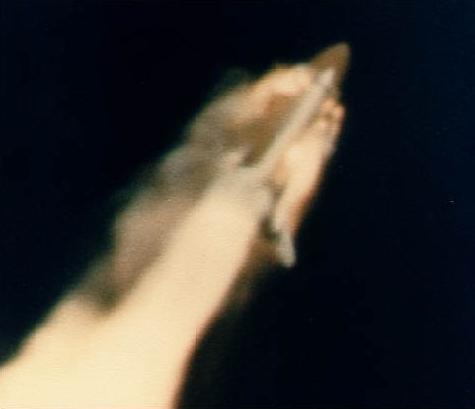
The crew compartment and many other vehicle fragments were eventually recovered from the ocean floor after a lengthy search and recovery operation. Although the exact timing of the death of the crew is unknown, several crew members are known to have survived the initial breakup of the spacecraft. However, the shuttle had no escape system and the astronauts did not survive the impact of the crew compartment with the ocean surface.

The disaster resulted in a 32-month hiatus in the shuttle program and the formation of the Rogers Commission, a special commission appointed by United States President Ronald Reagan to investigate the accident. The Rogers Commission found that NASA’s organizational culture and decision-making processes had been a key contributing factor to the accident. NASA managers had known that contractor Morton Thiokol’s design of the SRBs contained a potentially catastrophic flaw in the O-rings since 1977, but they failed to address it properly. They also disregarded warnings from engineers about the dangers of launching posed by the low temperatures of that morning and had failed to adequately report these technical concerns to their superiors. The Rogers Commission offered NASA nine recommendations that were to be implemented before shuttle flights resumed. (read more)

Martin Luther King 1967 Beyond Vietnam A Time to Break Silence
Martin Luther King, Jr.
Beyond Vietnam — A Time to Break Silence
Delivered 4 April 1967, Riverside Church, New York City
[AUTHENTICITY CERTIFIED: Text version below transcribed directly from audio. (2)]
Mr. Chairman, ladies and gentlemen:
I need not pause to say how very delighted I am to be here tonight, and how very delighted I am to see you expressing your concern about the issues that will be discussed tonight by turning out in such large numbers. I also want to say that I consider it a great honor to share this program with Dr. Bennett, Dr. Commager, and Rabbi Heschel, and some of the distinguished leaders and personalities of our nation. And of course it’s always good to come back to Riverside Church. Over the last eight years, I have had the privilege of preaching here almost every year in that period, and it is always a rich and rewarding experience to come to this great church and this great pulpit.
I come to this magnificent house of worship tonight because my conscience leaves me no other choice. I join you in this meeting because I am in deepest agreement with the aims and work of the organization which has brought us together: Clergy and Laymen Concerned about Vietnam. The recent statements of your executive committee are the sentiments of my own heart, and I found myself in full accord when I read its opening lines: “A time comes when silence is betrayal.” And that time has come for us in relation to Vietnam.
The truth of these words is beyond doubt, but the mission to which they call us is a most difficult one. Even when pressed by the demands of inner truth, men do not easily assume the task of opposing their government’s policy, especially in time of war. Nor does the human spirit move without great difficulty against all the apathy of conformist thought within one’s own bosom and in the surrounding world. Moreover, when the issues at hand seem as perplexing as they often do in the case of this dreadful conflict, we are always on the verge of being mesmerized by uncertainty; but we must move on.
And some of us who have already begun to break the silence of the night have found that the calling to speak is often a vocation of agony, but we must speak. We must speak with all the humility that is appropriate to our limited vision, but we must speak. And we must rejoice as well, for surely this is the first time in our nation’s history that a significant number of its religious leaders have chosen to move beyond the prophesying of smooth patriotism to the high grounds of a firm dissent based upon the mandates of conscience and the reading of history. Perhaps a new spirit is rising among us. If it is, let us trace its movements and pray that our own inner being may be sensitive to its guidance, for we are deeply in need of a new way beyond the darkness that seems so close around us.
Over the past two years, as I have moved to break the betrayal of my own silences and to speak from the burnings of my own heart, as I have called for radical departures from the destruction of Vietnam, many persons have questioned me about the wisdom of my path. At the heart of their concerns this query has often loomed large and loud: “Why are you speaking about the war, Dr. King?” “Why are you joining the voices of dissent?” “Peace and civil rights don’t mix,” they say. “Aren’t you hurting the cause of your people,” they ask? And when I hear them, though I often understand the source of their concern, I am nevertheless greatly saddened, for such questions mean that the inquirers have not really known me, my commitment or my calling. Indeed, their questions suggest that they do not know the world in which they live.
In the light of such tragic misunderstanding, I deem it of signal importance to try to state clearly, and I trust concisely, why I believe that the path from Dexter Avenue Baptist Church — the church in Montgomery, Alabama, where I began my pastorate — leads clearly to this sanctuary tonight.
I come to this platform tonight to make a passionate plea to my beloved nation. This speech is not addressed to Hanoi or to the National Liberation Front. It is not addressed to China or to Russia. Nor is it an attempt to overlook the ambiguity of the total situation and the need for a collective solution to the tragedy of Vietnam. Neither is it an attempt to make North Vietnam or the National Liberation Front paragons of virtue, nor to overlook the role they must play in the successful resolution of the problem. While they both may have justifiable reasons to be suspicious of the good faith of the United States, life and history give eloquent testimony to the fact that conflicts are never resolved without trustful give and take on both sides.
Tonight, however, I wish not to speak with Hanoi and the National Liberation Front, but rather to my fellow Americans.
Since I am a preacher by calling, I suppose it is not surprising that I have seven major reasons for bringing Vietnam into the field of my moral vision. There is at the outset a very obvious and almost facile connection between the war in Vietnam and the struggle I, and others, have been waging in America. A few years ago there was a shining moment in that struggle. It seemed as if there was a real promise of hope for the poor — both black and white — through the poverty program. There were experiments, hopes, new beginnings. Then came the buildup in Vietnam, and I watched this program broken and eviscerated, as if it were some idle political plaything of a society gone mad on war, and I knew that America would never invest the necessary funds or energies in rehabilitation of its poor so long as adventures like Vietnam continued to draw men and skills and money like some demonic destructive suction tube. So, I was increasingly compelled to see the war as an enemy of the poor and to attack it as such.
Perhaps a more tragic recognition of reality took place when it became clear to me that the war was doing far more than devastating the hopes of the poor at home. It was sending their sons and their brothers and their husbands to fight and to die in extraordinarily high proportions relative to the rest of the population. We were taking the black young men who had been crippled by our society and sending them eight thousand miles away to guarantee liberties in Southeast Asia which they had not found in southwest Georgia and East Harlem. And so we have been repeatedly faced with the cruel irony of watching Negro and white boys on TV screens as they kill and die together for a nation that has been unable to seat them together in the same schools. And so we watch them in brutal solidarity burning the huts of a poor village, but we realize that they would hardly live on the same block in Chicago. I could not be silent in the face of such cruel manipulation of the poor.
My third reason moves to an even deeper level of awareness, for it grows out of my experience in the ghettoes of the North over the last three years — especially the last three summers. As I have walked among the desperate, rejected, and angry young men, I have told them that Molotov cocktails and rifles would not solve their problems. I have tried to offer them my deepest compassion while maintaining my conviction that social change comes most meaningfully through nonviolent action. But they ask — and rightly so — what about Vietnam? They ask if our own nation wasn’t using massive doses of violence to solve its problems, to bring about the changes it wanted. Their questions hit home, and I knew that I could never again raise my voice against the violence of the oppressed in the ghettos without having first spoken clearly to the greatest purveyor of violence in the world today — my own government. For the sake of those boys, for the sake of this government, for the sake of the hundreds of thousands trembling under our violence, I cannot be silent.
For those who ask the question, “Aren’t you a civil rights leader?” and thereby mean to exclude me from the movement for peace, I have this further answer. In 1957 when a group of us formed the Southern Christian Leadership Conference, we chose as our motto: “To save the soul of America.” We were convinced that we could not limit our vision to certain rights for black people, but instead affirmed the conviction that America would never be free or saved from itself until the descendants of its slaves were loosed completely from the shackles they still wear. In a way we were agreeing with Langston Hughes, that black bard of Harlem, who had written earlier:
O, yes,
I say it plain,
America never was America to me,
And yet I swear this oath —
America will be!
I say it plain,
America never was America to me,
And yet I swear this oath —
America will be!
Now, it should be incandescently clear that no one who has any concern for the integrity and life of America today can ignore the present war. If America’s soul becomes totally poisoned, part of the autopsy must read: Vietnam. It can never be saved so long as it destroys the deepest hopes of men the world over. So it is that those of us who are yet determined that America will be — are — are led down the path of protest and dissent, working for the health of our land.
As if the weight of such a commitment to the life and health of America were not enough, another burden of responsibility was placed upon me in 19541; and I cannot forget that the Nobel Peace Prize was also a commission, a commission to work harder than I had ever worked before for “the brotherhood of man.” This is a calling that takes me beyond national allegiances, but even if it were not present I would yet have to live with the meaning of my commitment to the ministry of Jesus Christ. To me the relationship of this ministry to the making of peace is so obvious that I sometimes marvel at those who ask me why I’m speaking against the war. Could it be that they do not know that the good news was meant for all men — for Communist and capitalist, for their children and ours, for black and for white, for revolutionary and conservative? Have they forgotten that my ministry is in obedience to the One who loved his enemies so fully that he died for them? What then can I say to the Vietcong or to Castro or to Mao as a faithful minister of this One? Can I threaten them with death or must I not share with them my life?
And finally, as I try to explain for you and for myself the road that leads from Montgomery to this place I would have offered all that was most valid if I simply said that I must be true to my conviction that I share with all men the calling to be a son of the living God. Beyond the calling of race or nation or creed is this vocation of sonship and brotherhood, and because I believe that the Father is deeply concerned especially for his suffering and helpless and outcast children, I come tonight to speak for them.
This I believe to be the privilege and the burden of all of us who deem ourselves bound by allegiances and loyalties which are broader and deeper than nationalism and which go beyond our nation’s self-defined goals and positions. We are called to speak for the weak, for the voiceless, for the victims of our nation and for those it calls “enemy,” for no document from human hands can make these humans any less our brothers.
And as I ponder the madness of Vietnam and search within myself for ways to understand and respond in compassion, my mind goes constantly to the people of that peninsula. I speak now not of the soldiers of each side, not of the ideologies of the Liberation Front, not of the junta in Saigon, but simply of the people who have been living under the curse of war for almost three continuous decades now. I think of them, too, because it is clear to me that there will be no meaningful solution there until some attempt is made to know them and hear their broken cries.
They must see Americans as strange liberators. The Vietnamese people proclaimed their own independence in 1954 — in 1945 rather — after a combined French and Japanese occupation and before the communist revolution in China. They were led by Ho Chi Minh. Even though they quoted the American Declaration of Independence in their own document of freedom, we refused to recognize them. Instead, we decided to support France in its reconquest of her former colony. Our government felt then that the Vietnamese people were not ready for independence, and we again fell victim to the deadly Western arrogance that has poisoned the international atmosphere for so long. With that tragic decision we rejected a revolutionary government seeking self-determination and a government that had been established not by China — for whom the Vietnamese have no great love — but by clearly indigenous forces that included some communists. For the peasants this new government meant real land reform, one of the most important needs in their lives.
For nine years following 1945 we denied the people of Vietnam the right of independence. For nine years we vigorously supported the French in their abortive effort to recolonize Vietnam. Before the end of the war we were meeting eighty percent of the French war costs. Even before the French were defeated at Dien Bien Phu, they began to despair of their reckless action, but we did not. We encouraged them with our huge financial and military supplies to continue the war even after they had lost the will. Soon we would be paying almost the full costs of this tragic attempt at recolonization.
After the French were defeated, it looked as if independence and land reform would come again through the Geneva Agreement. But instead there came the United States, determined that Ho should not unify the temporarily divided nation, and the peasants watched again as we supported one of the most vicious modern dictators, our chosen man, Premier Diem. The peasants watched and cringed as Diem ruthlessly rooted out all opposition, supported their extortionist landlords, and refused even to discuss reunification with the North. The peasants watched as all this was presided over by United States’ influence and then by increasing numbers of United States troops who came to help quell the insurgency that Diem’s methods had aroused. When Diem was overthrown they may have been happy, but the long line of military dictators seemed to offer no real change, especially in terms of their need for land and peace.
The only change came from America, as we increased our troop commitments in support of governments which were singularly corrupt, inept, and without popular support. All the while the people read our leaflets and received the regular promises of peace and democracy and land reform. Now they languish under our bombs and consider us, not their fellow Vietnamese, the real enemy. They move sadly and apathetically as we herd them off the land of their fathers into concentration camps where minimal social needs are rarely met. They know they must move on or be destroyed by our bombs.
So they go, primarily women and children and the aged. They watch as we poison their water, as we kill a million acres of their crops. They must weep as the bulldozers roar through their areas preparing to destroy the precious trees. They wander into the hospitals with at least twenty casualties from American firepower for one Vietcong-inflicted injury. So far we may have killed a million of them, mostly children. They wander into the towns and see thousands of the children, homeless, without clothes, running in packs on the streets like animals. They see the children degraded by our soldiers as they beg for food. They see the children selling their sisters to our soldiers, soliciting for their mothers.
What do the peasants think as we ally ourselves with the landlords and as we refuse to put any action into our many words concerning land reform? What do they think as we test out our latest weapons on them, just as the Germans tested out new medicine and new tortures in the concentration camps of Europe? Where are the roots of the independent Vietnam we claim to be building? Is it among these voiceless ones?
We have destroyed their two most cherished institutions: the family and the village. We have destroyed their land and their crops. We have cooperated in the crushing — in the crushing of the nation’s only non-Communist revolutionary political force, the unified Buddhist Church. We have supported the enemies of the peasants of Saigon. We have corrupted their women and children and killed their men.
Now there is little left to build on, save bitterness. Soon, the only solid — solid physical foundations remaining will be found at our military bases and in the concrete of the concentration camps we call “fortified hamlets.” The peasants may well wonder if we plan to build our new Vietnam on such grounds as these. Could we blame them for such thoughts? We must speak for them and raise the questions they cannot raise. These, too, are our brothers.
Perhaps a more difficult but no less necessary task is to speak for those who have been designated as our enemies. What of the National Liberation Front, that strangely anonymous group we call “VC” or “communists“? What must they think of the United States of America when they realize that we permitted the repression and cruelty of Diem, which helped to bring them into being as a resistance group in the South? What do they think of our condoning the violence which led to their own taking up of arms? How can they believe in our integrity when now we speak of “aggression from the North” as if there were nothing more essential to the war? How can they trust us when now we charge them with violence after the murderous reign of Diem and charge them with violence while we pour every new weapon of death into their land? Surely we must understand their feelings, even if we do not condone their actions. Surely we must see that the men we supported pressed them to their violence. Surely we must see that our own computerized plans of destruction simply dwarf their greatest acts.
How do they judge us when our officials know that their membership is less than twenty-five percent communist, and yet insist on giving them the blanket name? What must they be thinking when they know that we are aware of their control of major sections of Vietnam, and yet we appear ready to allow national elections in which this highly organized political parallel government will not have a part? They ask how we can speak of free elections when the Saigon press is censored and controlled by the military junta. And they are surely right to wonder what kind of new government we plan to help form without them, the only party in real touch with the peasants. They question our political goals and they deny the reality of a peace settlement from which they will be excluded. Their questions are frighteningly relevant. Is our nation planning to build on political myth again, and then shore it up upon the power of new violence?
Here is the true meaning and value of compassion and nonviolence, when it helps us to see the enemy’s point of view, to hear his questions, to know his assessment of ourselves. For from his view we may indeed see the basic weaknesses of our own condition, and if we are mature, we may learn and grow and profit from the wisdom of the brothers who are called the opposition.
So, too, with Hanoi. In the North, where our bombs now pummel the land, and our mines endanger the waterways, we are met by a deep but understandable mistrust. To speak for them is to explain this lack of confidence in Western words, and especially their distrust of American intentions now. In Hanoi are the men who led the nation to independence against the Japanese and the French, the men who sought membership in the French Commonwealth and were betrayed by the weakness of Paris and the willfulness of the colonial armies. It was they who led a second struggle against French domination at tremendous costs, and then were persuaded to give up the land they controlled between the thirteenth and seventeenth parallel as a temporary measure at Geneva. After 1954 they watched us conspire with Diem to prevent elections which could have surely brought Ho Chi Minh to power over a united Vietnam, and they realized they had been betrayed again. When we ask why they do not leap to negotiate, these things must be remembered.
Also, it must be clear that the leaders of Hanoi considered the presence of American troops in support of the Diem regime to have been the initial military breach of the Geneva Agreement concerning foreign troops. They remind us that they did not begin to send troops in large numbers and even supplies into the South until American forces had moved into the tens of thousands.
Hanoi remembers how our leaders refused to tell us the truth about the earlier North Vietnamese overtures for peace, how the president claimed that none existed when they had clearly been made. Ho Chi Minh has watched as America has spoken of peace and built up its forces, and now he has surely heard the increasing international rumors of American plans for an invasion of the North. He knows the bombing and shelling and mining we are doing are part of traditional pre-invasion strategy. Perhaps only his sense of humor and of irony can save him when he hears the most powerful nation of the world speaking of aggression as it drops thousands of bombs on a poor, weak nation more than eight hundred — rather, eight thousand miles away from its shores.
At this point I should make it clear that while I have tried in these last few minutes to give a voice to the voiceless in Vietnam and to understand the arguments of those who are called “enemy,” I am as deeply concerned about our own troops there as anything else. For it occurs to me that what we are submitting them to in Vietnam is not simply the brutalizing process that goes on in any war where armies face each other and seek to destroy. We are adding cynicism to the process of death, for they must know after a short period there that none of the things we claim to be fighting for are really involved. Before long they must know that their government has sent them into a struggle among Vietnamese, and the more sophisticated surely realize that we are on the side of the wealthy, and the secure, while we create a hell for the poor.
Somehow this madness must cease. We must stop now. I speak as a child of God and brother to the suffering poor of Vietnam. I speak for those whose land is being laid waste, whose homes are being destroyed, whose culture is being subverted. I speak of the — for the poor of America who are paying the double price of smashed hopes at home, and death and corruption in Vietnam. I speak as a citizen of the world, for the world as it stands aghast at the path we have taken. I speak as one who loves America, to the leaders of our own nation: The great initiative in this war is ours; the initiative to stop it must be ours.
This is the message of the great Buddhist leaders of Vietnam. Recently one of them wrote these words, and I quote:
Each day the war goes on the hatred increases in the heart of the Vietnamese and in the hearts of those of humanitarian instinct. The Americans are forcing even their friends into becoming their enemies. It is curious that the Americans, who calculate so carefully on the possibilities of military victory, do not realize that in the process they are incurring deep psychological and political defeat. The image of America will never again be the image of revolution, freedom, and democracy, but the image of violence and militarism (unquote).
If we continue, there will be no doubt in my mind and in the mind of the world that we have no honorable intentions in Vietnam. If we do not stop our war against the people of Vietnam immediately, the world will be left with no other alternative than to see this as some horrible, clumsy, and deadly game we have decided to play. The world now demands a maturity of America that we may not be able to achieve. It demands that we admit that we have been wrong from the beginning of our adventure in Vietnam, that we have been detrimental to the life of the Vietnamese people. The situation is one in which we must be ready to turn sharply from our present ways. In order to atone for our sins and errors in Vietnam, we should take the initiative in bringing a halt to this tragic war.
I would like to suggest five concrete things that our government should do [immediately] to begin the long and difficult process of extricating ourselves from this nightmarish conflict:
Number one: End all bombing in North and South Vietnam.
Number two: Declare a unilateral cease-fire in the hope that such action will create the atmosphere for negotiation.
Three: Take immediate steps to prevent other battlegrounds in Southeast Asia by curtailing our military buildup in Thailand and our interference in Laos.
Four: Realistically accept the fact that the National Liberation Front has substantial support in South Vietnam and must thereby play a role in any meaningful negotiations and any future Vietnam government.
Five: Set a date that we will remove all foreign troops from Vietnam in accordance with the 1954 Geneva Agreement.
Part of our ongoing — Part of our ongoing commitment might well express itself in an offer to grant asylum to any Vietnamese who fears for his life under a new regime which included the Liberation Front. Then we must make what reparations we can for the damage we have done. We must provide the medical aid that is badly needed, making it available in this country, if necessary. Meanwhile — Meanwhile, we in the churches and synagogues have a continuing task while we urge our government to disengage itself from a disgraceful commitment. We must continue to raise our voices and our lives if our nation persists in its perverse ways in Vietnam. We must be prepared to match actions with words by seeking out every creative method of protest possible.
As we counsel young men concerning military service, we must clarify for them our nation’s role in Vietnam and challenge them with the alternative of conscientious objection. I am pleased to say that this is a path now chosen by more than seventy students at my own alma mater, Morehouse College, and I recommend it to all who find the American course in Vietnam a dishonorable and unjust one. Moreover, I would encourage all ministers of draft age to give up their ministerial exemptions and seek status as conscientious objectors. These are the times for real choices and not false ones. We are at the moment when our lives must be placed on the line if our nation is to survive its own folly. Every man of humane convictions must decide on the protest that best suits his convictions, but we must all protest.
Now there is something seductively tempting about stopping there and sending us all off on what in some circles has become a popular crusade against the war in Vietnam. I say we must enter that struggle, but I wish to go on now to say something even more disturbing.
The war in Vietnam is but a symptom of a far deeper malady within the American spirit, and if we ignore this sobering reality…and if we ignore this sobering reality, we will find ourselves organizing “clergy and laymen concerned” committees for the next generation. They will be concerned about Guatemala — Guatemala and Peru. They will be concerned about Thailand and Cambodia. They will be concerned about Mozambique and South Africa. We will be marching for these and a dozen other names and attending rallies without end, unless there is a significant and profound change in American life and policy.
And so, such thoughts take us beyond Vietnam, but not beyond our calling as sons of the living God.
In 1957, a sensitive American official overseas said that it seemed to him that our nation was on the wrong side of a world revolution. During the past ten years, we have seen emerge a pattern of suppression which has now justified the presence of U.S. military advisors in Venezuela. This need to maintain social stability for our investments accounts for the counterrevolutionary action of American forces in Guatemala. It tells why American helicopters are being used against guerrillas in Cambodia and why American napalm and Green Beret forces have already been active against rebels in Peru.
It is with such activity in mind that the words of the late John F. Kennedy come back to haunt us. Five years ago he said, “Those who make peaceful revolution impossible will make violent revolution inevitable.” Increasingly, by choice or by accident, this is the role our nation has taken, the role of those who make peaceful revolution impossible by refusing to give up the privileges and the pleasures that come from the immense profits of overseas investments. I am convinced that if we are to get on the right side of the world revolution, we as a nation must undergo a radical revolution of values. We must rapidly begin…we must rapidly begin the shift from a thing-oriented society to a person-oriented society. When machines and computers, profit motives and property rights, are considered more important than people, the giant triplets of racism, extreme materialism, and militarism are incapable of being conquered.
A true revolution of values will soon cause us to question the fairness and justice of many of our past and present policies. On the one hand, we are called to play the Good Samaritan on life’s roadside, but that will be only an initial act. One day we must come to see that the whole Jericho Road must be transformed so that men and women will not be constantly beaten and robbed as they make their journey on life’s highway. True compassion is more than flinging a coin to a beggar. It comes to see that an edifice which produces beggars needs restructuring.
A true revolution of values will soon look uneasily on the glaring contrast of poverty and wealth. With righteous indignation, it will look across the seas and see individual capitalists of the West investing huge sums of money in Asia, Africa, and South America, only to take the profits out with no concern for the social betterment of the countries, and say, “This is not just.” It will look at our alliance with the landed gentry of South America and say, “This is not just.” The Western arrogance of feeling that it has everything to teach others and nothing to learn from them is not just.
A true revolution of values will lay hand on the world order and say of war, “This way of settling differences is not just.” This business of burning human beings with napalm, of filling our nation’s homes with orphans and widows, of injecting poisonous drugs of hate into the veins of peoples normally humane, of sending men home from dark and bloody battlefields physically handicapped and psychologically deranged, cannot be reconciled with wisdom, justice, and love. A nation that continues year after year to spend more money on military defense than on programs of social uplift is approaching spiritual death.
America, the richest and most powerful nation in the world, can well lead the way in this revolution of values. There is nothing except a tragic death wish to prevent us from reordering our priorities so that the pursuit of peace will take precedence over the pursuit of war. There is nothing to keep us from molding a recalcitrant status quo with bruised hands until we have fashioned it into a brotherhood.
This kind of positive revolution of values is our best defense against communism. War is not the answer. Communism will never be defeated by the use of atomic bombs or nuclear weapons. Let us not join those who shout war and, through their misguided passions, urge the United States to relinquish its participation in the United Nations. These are days which demand wise restraint and calm reasonableness. We must not engage in a negative anticommunism, but rather in a positive thrust for democracy, realizing that our greatest defense against communism is to take offensive action in behalf of justice. We must with positive action seek to remove those conditions of poverty, insecurity, and injustice, which are the fertile soil in which the seed of communism grows and develops.
These are revolutionary times. All over the globe men are revolting against old systems of exploitation and oppression, and out of the wounds of a frail world, new systems of justice and equality are being born. The shirtless and barefoot people of the land are rising up as never before. “The people who sat in darkness have seen a great light.”2 We in the West must support these revolutions.
It is a sad fact that because of comfort, complacency, a morbid fear of communism, and our proneness to adjust to injustice, the Western nations that initiated so much of the revolutionary spirit of the modern world have now become the arch antirevolutionaries. This has driven many to feel that only Marxism has a revolutionary spirit. Therefore, communism is a judgment against our failure to make democracy real and follow through on the revolutions that we initiated. Our only hope today lies in our ability to recapture the revolutionary spirit and go out into a sometimes hostile world declaring eternal hostility to poverty, racism, and militarism. With this powerful commitment we shall boldly challenge the status quo and unjust mores, and thereby speed the day when “every valley shall be exalted, and every mountain and hill shall be made low, and the crooked shall be made straight, and the rough places plain.”3
A genuine revolution of values means in the final analysis that our loyalties must become ecumenical rather than sectional. Every nation must now develop an overriding loyalty to mankind as a whole in order to preserve the best in their individual societies.
This call for a worldwide fellowship that lifts neighborly concern beyond one’s tribe, race, class, and nation is in reality a call for an all-embracing — embracing and unconditional love for all mankind. This oft misunderstood, this oft misinterpreted concept, so readily dismissed by the Nietzsches of the world as a weak and cowardly force, has now become an absolute necessity for the survival of man. When I speak of love I am not speaking of some sentimental and weak response. I am not speaking of that force which is just emotional bosh. I am speaking of that force which all of the great religions have seen as the supreme unifying principle of life. Love is somehow the key that unlocks the door which leads to ultimate reality. This Hindu-Muslim-Christian-Jewish-Buddhist belief about ultimate — ultimate reality is beautifully summed up in the first epistle of Saint John: “Let us love one another, for love is God. And every one that loveth is born of God and knoweth God. He that loveth not knoweth not God, for God is love.” “If we love one another, God dwelleth in us and his love is perfected in us.”4 Let us hope that this spirit will become the order of the day.
We can no longer afford to worship the god of hate or bow before the altar of retaliation. The oceans of history are made turbulent by the ever-rising tides of hate. And history is cluttered with the wreckage of nations and individuals that pursued this self-defeating path of hate. As Arnold Toynbee says:
Love is the ultimate force that makes for the saving choice of life and good against the damning choice of death and evil. Therefore the first hope in our inventory must be the hope that love is going to have the last word (unquote).
We are now faced with the fact, my friends, that tomorrow is today. We are confronted with the fierce urgency of now. In this unfolding conundrum of life and history, there is such a thing as being too late. Procrastination is still the thief of time. Life often leaves us standing bare, naked, and dejected with a lost opportunity. The tide in the affairs of men does not remain at flood — it ebbs. We may cry out desperately for time to pause in her passage, but time is adamant to every plea and rushes on. Over the bleached bones and jumbled residues of numerous civilizations are written the pathetic words, “Too late.” There is an invisible book of life that faithfully records our vigilance or our neglect. Omar Khayyam is right: “The moving finger writes, and having writ moves on.”
We still have a choice today: nonviolent coexistence or violent coannihilation. We must move past indecision to action. We must find new ways to speak for peace in Vietnam and justice throughout the developing world, a world that borders on our doors. If we do not act, we shall surely be dragged down the long, dark, and shameful corridors of time reserved for those who possess power without compassion, might without morality, and strength without sight.
Now let us begin. Now let us rededicate ourselves to the long and bitter, but beautiful, struggle for a new world. This is the calling of the sons of God, and our brothers wait eagerly for our response. Shall we say the odds are too great? Shall we tell them the struggle is too hard? Will our message be that the forces of American life militate against their arrival as full men, and we send our deepest regrets? Or will there be another message — of longing, of hope, of solidarity with their yearnings, of commitment to their cause, whatever the cost? The choice is ours, and though we might prefer it otherwise, we must choose in this crucial moment of human history.
As that noble bard of yesterday, James Russell Lowell, eloquently stated:
Once to every man and nation comes a moment to decide,
In the strife of truth and Falsehood, for the good or evil side;
Some great cause, God’s new Messiah offering each the bloom or blight,
And the choice goes by forever ‘twixt that darkness and that light.
Though the cause of evil prosper, yet ’tis truth alone is strong
Though her portions be the scaffold, and upon the throne be wrong
Yet that scaffold sways the future, and behind the dim unknown
Standeth God within the shadow, keeping watch above his own.
And if we will only make the right choice, we will be able to transform this pending cosmic elegy into a creative psalm of peace. If we will make the right choice, we will be able to transform the jangling discords of our world into a beautiful symphony of brotherhood. If we will but make the right choice, we will be able to speed up the day, all over America and all over the world, when “justice will roll down like waters, and righteousness like a mighty stream.”5


Samuel Langhorne Clemens
(November 30, 1835 â April 21, 1910)
Mark Twainâs Autobiography or The Autobiography of Mark Twain refers to a lengthy set of reminiscences, dictated, for the most part, in the last few years of American author Mark Twain’s life and left in typescript and manuscript at his death. The Autobiography comprises a rambling collection of anecdotes and ruminations rather than a proper autobiography.
The first edition of the entire manuscript is scheduled for publication in November 2010, the 100th anniversary year of Twainâs death, edited by the The Mark Twain Papers and Project of The Bancroft Library at University of California, Berkeley and published by University of California Press.
Twain first started to compose an autobiography in 1870, but proceeded fitfully, abandoning the work and returning to it as the mood took him. In a 1904 letter to William Dean Howells, he wrote: “Iâve struck it! And I will give it awayâto you. You will never know how much enjoyment you have lost until you get to dictating your autobiography.” By 1904 Twain had embarked on what he called his “Final (and Right) Plan” for telling the story of his life. However, after 1907 he again seems to have let the book languish; in 1908-9 he hardly added to it at all, and he declared the project concluded in 1909, after the death of his youngest daughter Jean. His innovative notion â to “talk only about the thing which interests you for the moment” â meant that his thoughts could range freely. Twain thought his autobiography would be most entertaining if he went off on whims and tangents in non-sequential order.
Twain outlined a plan in 1899 for an autobiographical work which was to be published (according to different accounts of the episode) either “100 years from now” or “100 years after his death.” A manuscript note in the Mark Twain Papers (UC Berkeley) indicates a 100-year ban was what he was contemplating. Twain did produce a preface ‘From the Grave’ claiming that the book would not be published until after his death, which allowed him to speak with his “whole frank mind.” (read more) (nytimes)

Infinite space…
infinite time…
infinite possibilities