

Harry Morgan (born Harry Bratsberg, often spelled Harry Bratsburg; April 10, 1915 â December 7, 2011) was an American actor. He was widely known for his roles as Pete Porter in both December Bride (1954â1959) and Pete and Gladys (1960â1962), Detective Bill Gannon on Dragnet (1967â1970), Amos Coogan on Hec Ramsey (1972â1974), and Colonel Sherman T. Potter in M*A*S*H (1975â1983) and AfterMASH (1983-1984). Additionally, Morgan appeared in more than 100 films.
Morgan’s first appearance on M*A*S*H was in the show’s third season (1974â1975), when he played eccentric Major General Bartford Hamilton Steele in “The General Flipped at Dawn”, which originally aired on September 10, 1974.
The following season, Morgan joined the cast of M*A*S*H as Colonel Sherman T. Potter. Morgan replaced McLean Stevenson, who had left the show at the end of the previous season. Col. Potter is a career army officer who is tough, yet good-humored and caring — a father figure to the people under his command.
In 1980, Morgan won an Emmy award for his performance on M*A*S*H. When asked if he was a better actor after working with the show’s talented cast, Morgan responded, “I don’t know about that, but it’s made me a better human being.”


Operation Mockingbird was a secret campaign by the United States Central Intelligence Agency (CIA) to influence media.
Begun in the 1950s, it was initially organized by Cord Meyer and Allen W. Dulles, and was later led by Frank Wisner after Dulles became the head of the CIA.
The organization recruited leading American journalists into a network to help present the CIA’s views, and funded some student and cultural organizations, and magazines as fronts.
As it developed, it also worked to influence foreign media and political campaigns, in addition to activities by other operating units of the CIA. (read more)

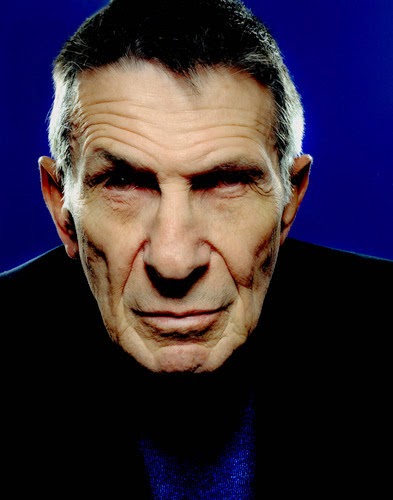
Leonard Simon Nimoy (March 26, 1931 â February 27, 2015) was an American actor, film director, poet, singer and photographer. Nimoy was known for his role as Spock in the original Star Trek series (1966â69), and in multiple film, television and video game sequels.
Nimoy was born to Jewish immigrant parents in Boston, Massachusetts. He began his career in his early twenties, teaching acting classes in Hollywood and making minor film and television appearances through the 1950s, as well as playing the title role in Kid Monk Baroni. Foreshadowing his fame as a semi-alien, he played Narab, one of three Martian invaders in the 1952 movie serial Zombies of the Stratosphere. From 1953-1955, he served in the United States Army.
In 1965, he made his first appearance in the rejected Star Trek pilot The Cage, and went on to play the character of Mr. Spock until 1969, followed by eight feature films and guest slots in the various spin-off series. The character has had a significant cultural impact and garnered Nimoy three Emmy Award nominations; TV Guide named Spock one of the 50 greatest TV characters. After the original Star Trek series, Nimoy starred in Mission: Impossible for two seasons, hosted the documentary series In Search of…, and narrated Civilization IV, as well as making several well-received stage appearances. More recently, he also had a recurring role in the science fiction series Fringe.
Nimoy’s fame as Spock was such that both of his autobiographies, I Am Not Spock (1975) and I Am Spock (1995), were written from the viewpoint of sharing his existence with the character.
Nimoy’s greatest prominence came from his role in the original Star Trek series. As the half-Vulcan, half-human Spockâa role he chose instead of one on the soap opera Peyton PlaceâNimoy became a star, and the press predicted that he would “have his choice of movies or television series”. He formed a long-standing friendship with Shatner, who portrayed his commanding officer, saying of their relationship, “We were like brothers.” Star Trek was broadcast from 1966 to 1969. Nimoy earned three Emmy Award nominations for his work on the program.
He went on to reprise the Spock character in Star Trek: The Animated Series and two episodes of Star Trek: The Next Generation. When a new Star Trek series was planned in the late 1970s, Nimoy was to be in only two out of eleven episodes, but when the show was elevated to a feature film, he agreed to reprise his role. The first six Star Trek movies feature the original Star Trek cast including Nimoy, who also directed two of the films. He played the elder Spock in the 2009 Star Trek movie and reprised the role in a brief appearance in the 2013 sequel, Star Trek Into Darkness, both directed by J. J. Abrams.
Spock’s Vulcan salute became a recognized symbol of the show and was identified with him. Nimoy created the sign himself from his childhood memories of the way kohanim (Jewish priests) hold their hand when giving blessings. During an interview, he translated the priestly blessing from Numbers 6:24â26 which accompanies the sign and described it during a public lecture:
May the Lord bless and keep you and may the Lord cause his countenance to shine upon you. May the Lord be gracious unto you and grant you peace. The accompanying spoken blessing, “Live long and prosper.” (read more)


Experiments conducted by researcher Herbert Krugman reveal that when a person watches television, brain activity switches from the left to the right hemisphere. The left hemisphere is the seat of logical thought. Here, information is broken down into its component parts and critically analyzed. The right brain, however, treats incoming data uncritically, processing information in wholes, leading to emotional, rather than logical responses. The shift from left to right brain activity also causes the release of endorphins, the body’s own natural opiates–thus, it is possible to become physically addicted to watching television, a hypothesis borne out by numerous studies which have shown that very few people are able to kick the television habit. It’s no longer an overstatement to note that the youth today that are raised and taught through network television are intellectually dead by their early teens.
The dumbing down of humanity is represented by another shift which occurs in the brain when we watch television. Activity in the higher brain regions (such as the neo-cortex) is diminished, while activity in the lower brain regions (such as the limbic system) increases. The latter, commonly referred to as the reptile brain, is associated with more primitive mental functions, such as the “fight or flight” response. The reptile brain is unable to distinguish between reality and the simulated reality of television. To the reptile brain, if it looks real, it is real. Thus, though we know on a conscious level it is “only a film,” on a conscious level we do not–the heart beats faster, for instance, while we watch a suspenseful scene. Similarly, we know the commercial is trying to manipulate us, but on an unconscious level the commercial nonetheless succeeds in, say, making us feel inadequate until we buy whatever thing is being advertised–and the effect is all the more powerful because it is unconscious, operating on the deepest level of human response. The reptile brain makes it possible for us to survive as biological beings, but it also leaves us vulnerable to the manipulations of television programmers. This is where the manipulators use our own emotions as strings to control us. The distortions and directions we are being moved to are taking place in the subconscious, often undetected.
Propaganda techniques were first codified and applied in a scientific manner by journalist Walter Lippman and psychologist Edward Bernays (nephew of Sigmund Freud) early in the 20th century. During World War I, Lippman and Bernays were hired by then United States President, Woodrow Wilson, to participate in the Creel Commission, the mission of which was to sway popular opinion in favor of entering the war, on the side of Britain. Edward Bernays said in his 1928 book Propaganda that, “The conscious and intelligent manipulation of the organized habits and opinions of the masses is an important element in democratic society. Those who manipulate this unseen mechanism of society constitute an invisible government which is the true ruling power of our country.” (read more)

Jonathan Harshman Winters III (November 11, 1925 â April 11, 2013) was an American comedian, actor and artist.
Beginning in 1960, Winters recorded many classic comedy albums for the Verve Records label. He also had comedy albums released every decade for over 50 years, receiving 11 Grammy Award for Best Comedy Album nominations during his career, and winning the Grammy Award for Best Spoken Comedy Album for Crank(y) Calls in 1996.
Winters has also appeared in hundreds of television show episodes/series and films combined, including eccentric characters on The Steve Allen Show, The Garry Moore Show, The Wacky World of Jonathan Winters (1972â74), Mork & Mindy, Hee Haw and in It’s a Mad, Mad, Mad, Mad World.
A pioneer of improvisational stand-up comedy with a gift for mimicry, various personalities and a seemingly bottomless reservoir of creative energy, Winters was one of the first celebrities to go public with a personal mental illness issue and felt stigmatized as a result. According to Jack Paar, âIf you were to ask me the funniest 25 people Iâve ever known, Iâd say, âHere they are â Jonathan Wintersâ.” He also said of Winters, âPound for pound, the funniest man aliveâ.
In 1991, Winters earned an Emmy Award for his supporting role in Davis Rules. In 2002, he earned an Emmy nomination as a guest star in a comedy series for Life With Bonnie. In 1999, Winters was awarded the Mark Twain Prize for American Humor. In 2008, Winters was presented with a Pioneer TV Land Award by Robin Williams.
Winters also spent time painting and presenting his art in many gallery shows. (read more)

Ernest Borgnine (born Ermes Effron Borgnino; January 24, 1917 â July 8, 2012) was an American film and television actor whose career spanned more than six decades. He was an unconventional lead in many films of the 1950s, winning an Oscar in 1955 for Marty. On television, he played Quinton McHale in the 1962â1966 series McHale’s Navy and co-starred in the mid-1980s action series Airwolf, in addition to a wide variety of other roles. Borgnine was also known for his role as Mermaid Man in the animated television series SpongeBob SquarePants. Borgnine earned an Emmy Award nomination at age 92 for his work on the series ER. (read more)