


Stratolaunch Systems is a space transportation venture specializing in air launch to orbit, with its corporate headquarters located in Huntsville, Alabama. It was founded in 2011 by Microsoft co-founder Paul G. Allen and Scaled Composites founder Burt Rutan, who had previously collaborated on the creation of SpaceShipOne. The newly envisioned launch system will use similar components to that of Virgin Galactic though it will be made for orbital launch instead of sub-orbital. The start up will build a mobile launch system with three primary components; a carrier aircraft to be built by Scaled Composites, a multi-stage launch vehicle built by Space Exploration Technologies, and a mating and integration system to be built by Dynetics.
Allen and Rutan stated that the carrier aircraft would have a wingspan of 385 feet (117 m), making it the largest wingspan of a aircraft ever to fly, and will weigh in at over 1,200,000 pounds (540,000 kg). The aircraft will be powered by 6 Ã 46,000-66,500lb thrust range Turbine Engines planned to be sourced from a Boeing 747 engines and other components from the 400-series.
A Falcon-derivative two-stage liquid-fueled air-launched launch vehicle will be developed by SpaceX. The launch vehicle will have a launch mass of approximately 220,000 kilograms (490,000 lb) and will have the goal of inserting a 6,100 kilograms (13,000 lb) payload into low Earth orbit. (read more) (video clip) (stratolaunch)

Asteroid YU-55, also written as 2005 YU55, is a potentially hazardous asteroid approximately 400 meters (1,300 feet) in diameter. It was discovered on 28 December 2005 by Robert S. McMillan at Steward Observatory, Kitt Peak. On 8 November 2011 it passed 0.85 lunar distances (324,600 kilometers or 201,700 miles) from the Earth. This is the closest known approach by an asteroid with an absolute magnitude this bright since 2010 XC15 (H = 21.4) approached within 0.5 lunar distances in 1976. (read more) (video clip)


X-37B during encapsulation ahead of the OTV-1 launch
X-37B OTV-1 (Orbital Test Vehicle 1) or USA-212 is the first flight of the Boeing X-37B, an American unmanned robotic spacecraft. It was launched aboard an Atlas V rocket from Cape Canaveral on 22 April 2010, and is currently operating in low Earth orbit.
The spacecraft is operated by the United States Air Force, which has not revealed what the spaceship’s specific payload is, stating only that it will “demonstrate various experiments and allow satellite sensors, subsystems, components, and associated technology to be transported into space and back.”
Most of the mission parameters for the OTV-1 flight have not been disclosed. The vehicle is capable of being on-orbit for up to 270 days. The Air Force stated the mission time will depend on progress of the craft’s experiments during orbit. Mission control is handled by the 3d Space Experimentation Squadron, 21st Space Wing, of the Air Force Space Command in Colorado Springs.
James Oberg speculates that the concurrent launch of Air Force’s Hypersonic Technology Vehicle HTV-2 is related to the mission. Part of X-37B’s mission profile might involve a simulated enemy attack, which X-37B should detect and autonomously react on it. HTV-2 was launched at 23:00 UTC on April 22, 2010, i.e., 52 min ahead of X-37B, from Vandenberg Air Force Base in California.
Some speculators believe it marks the beginning of military operations in space. In particular, William Scott, co-author of the techno-novel Counterspace: The Next Hours of World War III and former Rocky Mountain Bureau Chief for Aviation Week & Space Technology magazine believes that with OTV-1 the Air Force might test weapons delivery from a space plane in low Earth orbit. He mentions Rods from God as a possible scenario. (read more) (video clip)


Paul Adrien Maurice Dirac, OM, FRS (8 August 1902 â 20 October 1984) was an English theoretical physicist who made fundamental contributions to the early development of both quantum mechanics and quantum electrodynamics. He held the Lucasian Chair of Mathematics at the University of Cambridge and spent the last fourteen years of his life at Florida State University.
Among other discoveries, he formulated the Dirac equation, which describes the behaviour of fermions, and predicted the existence of antimatter.
Dirac shared the Nobel Prize in physics for 1933 with Erwin Schrödinger, “for the discovery of new productive forms of atomic theory.”
Dirac is widely regarded as one of the world’s greatest physicists. He was one of the founders of quantum mechanics and quantum electrodynamics.
His early contributions include the modern operator calculus for quantum mechanics, which he called transformation theory, and an early version of the path integral. He formulated a many-body formalism for quantum mechanics which allowed each particle to have its own proper time.
His relativistic wave equation for the electron was the first successful attack on the problem of relativistic quantum mechanics. Dirac founded quantum field theory with his reinterpretation of the Dirac equation as a many-body equation, which predicted the existence of antimatter and matterâantimatter annihilation. He was the first to formulate quantum electrodynamics, although he could not calculate arbitrary quantities because the short distance limit requires renormalization. (read more)

I must not fear.
Fear is the mind-killer.
Fear is the little-death that brings total obliteration.
I will face my fear.
I will permit it to pass over me and through me.
And when it has gone past I will turn the inner eye to see its path.
Where the fear has gone there will be nothing.
Only I will remain.
Bene Gesserit Litany Against Fear.


In mathematics, the Fibonacci numbers are the numbers in the following integer sequence:
0, 1, 1, 2, 3, 5, 8, 13, 21, 34, 55, 89, 144…
By definition, the first two Fibonacci numbers are 0 and 1, and each subsequent number is the sum of the previous two.
In mathematical terms, the sequence Fn of Fibonacci numbers is defined by the recurrence relation with seed values.
The Fibonacci sequence is named after Leonardo of Pisa, who was known as Fibonacci. Fibonacci’s 1202 book Liber Abaci introduced the sequence to Western European mathematics, although the sequence had been described earlier in Indian mathematics. (By modern convention, the sequence begins with F0 = 0. The Liber Abaci began the sequence with F1 = 1, omitting the initial 0, and the sequence is still written this way by some.)
Fibonacci numbers are closely related to Lucas numbers in that they are a complementary pair of Lucas sequences. They are intimately connected with the golden ratio, for example the closest rational approximations to the ratio are 2/1, 3/2, 5/3, 8/5, … . Applications include computer algorithms such as the Fibonacci search technique and the Fibonacci heap data structure, and graphs called Fibonacci cubes used for interconnecting parallel and distributed systems. They also appear in biological settings, such as branching in trees, arrangement of leaves on a stem, the fruit spouts of a pineapple, the flowering of artichoke, an uncurling fern and the arrangement of a pine cone. (read more)


PASADENA, Calif. — Scientists analyzing data from NASA’s Cassini spacecraft now have the first-ever, up-close details of a Saturn storm that is eight times the surface area of Earth.
On Dec. 5, 2010, Cassini first detected the storm that has been raging ever since. It appears approximately 35 degrees north latitude of Saturn. Pictures from Cassini’s imaging cameras show the storm wrapping around the entire planet covering approximately 2 billion square miles (4 billion square kilometers).
The storm is about 500 times larger than the biggest storm previously seen by Cassini during several months from 2009 to 2010. Scientists studied the sounds of the new storm’s lightning strikes and analyzed images taken between December 2010 and February 2011. Data from Cassini’s radio and plasma wave science instrument showed the lightning flash rate as much as 10 times more frequent than during other storms monitored since Cassini’s arrival to Saturn in 2004. The data appear in a paper published this week in the journal Nature. (read more)

Spinning around in space…
we are all…
in the same lifeboat.

“fear is the path to the dark side…
fear leads to anger…
anger leads to hate…
hate leads to suffering…
i sense much fear in you…”
…yoda…

Apollo 13 was the seventh manned mission in the American Apollo space program and the third intended to land on the Moon. The craft was successfully launched toward the Moon, but the landing had to be aborted after an oxygen tank ruptured, severely damaging the spacecraft’s electrical system. The flight was commanded by James A. Lovell with John L. “Jack” Swigert as Command Module pilot and Fred W. Haise as Lunar Module pilot. Swigert was a late replacement for the original CM pilot Ken Mattingly, who was grounded by the flight surgeon after exposure to German measles.
The mission was launched on April 11, 1970 at 13:13 CST. Two days later an explosion crippled the service module upon which the Command Module depended. To conserve its batteries and the oxygen needed for the last hours of flight, the crew instead used the Lunar Module’s resources as a “lifeboat” during the return trip to Earth. Despite great hardship caused by limited power, loss of cabin heat, shortage of potable water and the critical need to jury-rig the carbon dioxide removal system, the crew returned safely to Earth on April 17. NASA called the mission a “successful failure”. (read more)


you are here

The Space Shuttle Challenger disaster occurred on Tuesday, January 28, 1986, when Space Shuttle Challenger broke apart 73 seconds into its flight, leading to the deaths of its seven crew members. The spacecraft disintegrated over the Atlantic Ocean, off the coast of central Florida, United States, at 11:38 a.m. EST (16:38 UTC).

Disintegration of the entire vehicle began after an O-ring seal in its right solid rocket booster (SRB) failed at liftoff. The O-ring failure caused a breach in the SRB joint it sealed, allowing pressurized hot gas from within the solid rocket motor to reach the outside and impinge upon the adjacent SRB attachment hardware and external fuel tank. This led to the separation of the right-hand SRB’s aft attachment and the structural failure of the external tank. Aerodynamic forces promptly broke up the orbiter.
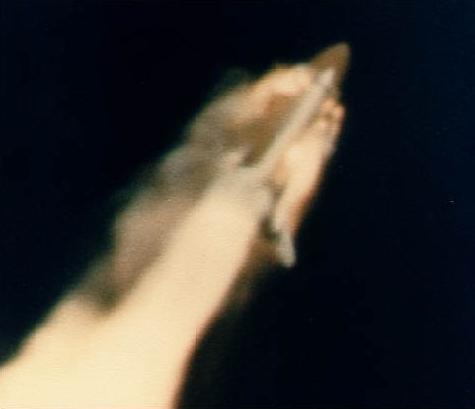
The crew compartment and many other vehicle fragments were eventually recovered from the ocean floor after a lengthy search and recovery operation. Although the exact timing of the death of the crew is unknown, several crew members are known to have survived the initial breakup of the spacecraft. However, the shuttle had no escape system and the astronauts did not survive the impact of the crew compartment with the ocean surface.

The disaster resulted in a 32-month hiatus in the shuttle program and the formation of the Rogers Commission, a special commission appointed by United States President Ronald Reagan to investigate the accident. The Rogers Commission found that NASA’s organizational culture and decision-making processes had been a key contributing factor to the accident. NASA managers had known that contractor Morton Thiokol’s design of the SRBs contained a potentially catastrophic flaw in the O-rings since 1977, but they failed to address it properly. They also disregarded warnings from engineers about the dangers of launching posed by the low temperatures of that morning and had failed to adequately report these technical concerns to their superiors. The Rogers Commission offered NASA nine recommendations that were to be implemented before shuttle flights resumed. (read more)

Is it a coincidence that the Cassini space probe inexplicably stopped sending images as it was about to fly by Titan, one of the moons of Saturn [link]? Titan is known to harbour conditions necessary for life. Another place considered a likely candidate for extraterrestrial life is Europa, one of the moons of Jupiter. However, the canyons of Europa have eluded attempts at observation as well [link]. Early radio astronomers claim to have received signals, leaking from Titan, that suggest the presence of an extraterrestrial species. However, they are trapped and shielded from detection by parasitic aliens from another galaxy ..aliens who have been exploiting Titanâs resources for eons [link]. This explains why conditions there have deteriorated to an almost âpre-bioticâ state. The result has been a sort of reverse-geo-evolution. In itâs day, Titan could have been just as hospitable a place as Earth is today.


