

whats up: RC’s NUCLEAR BLOG
NO NUKES | RE-TOOL NOW
The OcNuke Daily (#OccupyNuclear) | on twitter: #OccupyNuclear

Wilhelm Reich (March 24, 1897 â November 3, 1957) was an Austrian-American psychiatrist and psychoanalyst, known as one of the most radical figures in the history of psychiatry. He was the author of several notable books, including The Mass Psychology of Fascism and Character Analysis, both published in 1933.
Reich worked with Sigmund Freud in the 1920s and was a respected analyst for much of his life, focusing on character structure rather than on individual neurotic symptoms. He tried to reconcile Marxism and psychoanalysis, arguing that neurosis is rooted in the physical, sexual, economic, and social conditions of the patient, and promoted adolescent sexuality, the availability of contraceptives, abortion, and divorce, and the importance for women of economic independence. His work influenced a generation of intellectuals, including Saul Bellow, William S. Burroughs, Paul Edwards, Norman Mailer, A. S. Neill, and Robert Anton Wilson, and shaped innovations such as Fritz Perls’s Gestalt therapy, Alexander Lowen’s bioenergetic analysis, and Arthur Janov’s primal therapy.

Later in life he became a controversial figure who was both adored and condemned. He began to violate some of the key taboos of psychoanalysis, using touch during sessions, and treating patients in their underwear to improve their “orgastic potency.” He said he had discovered a primordial cosmic energy, which he said others called God and that he called “orgone”. He built orgone energy accumulators that his patients sat inside to harness the reputed health benefits, leading to newspaper stories about sex boxes that cured cancer.
Reich was living in Germany when Adolf Hitler came to power in January 1933. On March 2 that year the Nazi newspaper Völkischer Beobachter published an attack on one of Reich’s pamphlets, The Sexual Struggle of Youth. He left immediately for Vienna, then Scandinavia, moving to the United States in 1939. In 1947, following a series of articles about orgone in The New Republic and Harper’s, the U.S. Food and Drug Administration (FDA) obtained an injunction against the interstate sale of orgone accumulators. Charged with contempt for violating it, Reich conducted his own defense, which involved sending the judge all his books to read and arguing that a court was no place to decide matters of science. He was sentenced to two years in prison, and in August 1956 several tons of his publications were burned by the FDA – a notable example of censorship in U.S. history. He died in jail of heart failure just over a year later, days before he was due to apply for parole.

“You’re insane !…
no…
insanity is wasting your life with the nothing…
when you have the blood of a killer in your veins…
insanity is being shit on, beat down, coasting through life…
in a miserable existence when you have a caged lion locked inside…
and the key to release it…”

Amit Goswami is a theoretical nuclear physicist and member of The University of Oregon Institute for Theoretical Physics since 1968, teaching physics for 32 years. After a period of distress and frustration in his private and professional life starting at the age 38, his research interests shifted to quantum cosmology, quantum measurement theory, and applications of quantum mechanics to the mind-body problem. He became best known as one of the interviewed scientists featured in the 2004 film What the Bleep Do We Know!?. Goswami is also featured in the recent documentary about the Dalai Lama entitled Dalai Lama Renaissance, and stars in the newly released documentary “The Quantum Activist”
In the late 1980s Goswami developed an idealist interpretation of quantum mechanics, inspired in part by philosophical ideas drawn from Advaita Vedanta and theosophy. Calling his theory “monistic idealism”, he claims it is not only “the basis of all religions worldwide” but also the correct philosophy for modern science. In contrast to materialistic conventional science, he claims that universal consciousness, not matter, is the ground of all existence, in congruence with mystic sages. Consciousness, deemed as the precursor of physicality, arises from conscious observation through a process intimately connected to wavefunction collapse in a quantum measurement. Once the assumption that there is an objective reality independent of consciousness is put aside, the paradoxes of quantum physics are explainable, according to Goswami.
As a pioneer of a self-styled multidisciplinary scientific paradigm, he refers to himself as a “quantum activist” engaging in research on the “Science within consciousness”, which comprises and explains the “downward causation” and the upwards drift in the fields of physics, biology, and psychology and more recently the healing arts, thus resulting in varied theories of integral medicine based on five interchanging levels of existence: the physical, the vital, the mental, the supra-mental intellect and the limitless bliss state. (read more)

A BoseâEinstein condensate (BEC) is a state of matter of a dilute gas of weakly interacting bosons confined in an external potential and cooled to temperatures very near absolute zero (0 K or â273.16 °C). Under such conditions, a large fraction of the bosons occupy the lowest quantum state of the external potential, at which point quantum effects become apparent on a macroscopic scale.
This state of matter was first predicted by Satyendra Nath Bose and Albert Einstein in 1924â25. Bose first sent a paper to Einstein on the quantum statistics of light quanta (now called photons). Einstein was impressed, translated the paper himself from English to German and submitted it for Bose to the Zeitschrift für Physik which published it. Einstein then extended Bose’s ideas to material particles (or matter) in two other papers.
Seventy years later, the first gaseous condensate was produced by Eric Cornell and Carl Wieman in 1995 at the University of Colorado at Boulder NIST-JILA lab, using a gas of rubidium atoms cooled to 170 nanokelvin (nK) (1.7Ã10â7 K). For their achievements Cornell, Wieman, and Wolfgang Ketterle at MIT received the 2001 Nobel Prize in Physics. In November 2010 the first photon BEC was observed. (read more) (see more)
…………………………….
You think that light is fast? Well, think again. Sometimes it is slower than a crawl. All schoolchildren know that light is the fastest thing there is. It zips along through empty space at 297,000 km per second (186,000 miles a second).
But now a Danish physicist and her team of collaborators have found a way to slow light down to less than 1.6 km per hour (one mile an hour) – slower than a slow walk.
The way Dr Hau and her team have slowed down light by a factor of 600 million or so is to use a group of atoms called a Bose-Einstein condensate (BEC). These atoms are cooled to a temperature of only a few billionths of a degree above absolute zero, the coldest possible temperature, at which all motion stops.
In a Bose-Einstein condensate, atoms are hardly moving at all. This means that according to the uncertainty principle that rules atoms, they are spread out and overlap. This results in a group identity for the collection of supercold atoms. And when light passes through such an environment, it will slow down.
By firing co-ordinated beams of laser light through the BEC, Hau and colleagues have slowed light down to a crawl. Inside the BEC, the so-called refractive index (which measures the slowing of light) becomes enormous: as high as 100 trillion times greater than that of glass. (news.bbc.co.uk)

Telepathy (from the Greek Ïηλε, tele meaning “distant” and Ïάθη, pathe meaning “affliction, experience”), is the transfer of information on thoughts or feelings between individuals by means other than the “five classic senses” (See Psi). The term was coined in 1882 by the classical scholar Fredric W. H. Myers, a founder of the Society for Psychical Research, specifically to replace the earlier expression thought-transference. A telepath is a person with the paranormal ability to read others’ thoughts and mental contents. Telepathy is one kind of extrasensory perception which, along with psychokinesis, forms the main topics of parapsychological research. Many studies seeking to detect, understand, and utilize telepathy have been done within this field. This research has neither produced a replicable demonstration of telepathy, nor an accepted mechanism by which it might work. Hence the scientific community does not regard telepathy as a real phenomenon. It is hard to unambiguously distinguish telepathy from a number of other parapsychological hypotheses such as clairvoyance.
Although not a recognized scientific discipline, people who study certain types of paranormal phenomena such as telepathy refer to the field as parapsychology. Parapsychologists claim that some instances of telepathy are real. Skeptics say that instances of apparent telepathy are explained as the result of fraud, self-delusion and/or self-deception and that telepathy does not exist as a paranormal power.
Parapsychologists such as Dean Radin, president of the Parapsychological Association, argue that the statistical significance and consistency of results shown by a meta-analysis of numerous studies provides evidence for telepathy that is almost impossible to account for using any other means. (read more)
The Army has given a team of University of California researchers a $4 million grant to study the foundations of “synthetic telepathy.” But unlike old-school mind-melds, this seemingly psychic communication would be computer-mediated. The University of California, Irvine explains:
The brain-computer interface would use a noninvasive brain imaging technology like electroencephalography to let people communicate thoughts to each other. For example, a soldier would “think” a message to be transmitted and a computer-based speech recognition system would decode the EEG signals. The decoded thoughts, in essence translated brain waves, are transmitted using a system that points in the direction of the intended target. (read more)
Ingo Swann (born Ingo Douglas Swan on 09/14/1933 in Telluride, CO) is an artist and author, best known for his work as a co-creator (according to his frequent collaborators Russell Targ and Harold Puthoff) of the discipline of remote viewing, specifically the Stargate Project. He has written several books on remote viewing or related topics.
Swann does not identify himself as a “psychic,” preferring to describe himself as a “consciousness researcher” who had sometimes experienced “altered states of consciousness.” Swann has stated, “I don’t get tested, I only work with researchers on well-designed experiments.” Swann is dissatisfied in a role as a passive subject. He feels he must contribute to the preliminary design of the research. According to Russell Targ and Harold Puthoff, there have been “Swann-inspired innovations” that have led to impressive results in parapsychology. Experiments not controlled by Swann have not been very successful. These are rarely mentioned, and if so, only in passing.
Swann helped develop the process of remote viewing at the Stanford Research Institute in experiments that cauught the attention of the Central Intelligence Agency. He is commonly credited with proposing the idea of Coordinate Remote Viewing, a process in which viewers would view a location given nothing but its geographical coordinates, which was developed and tested by Puthoff and Targ with CIA funding. Due to the popularity of Uri Geller in the seventies a critical examination of Ingo Swann’s paranormal claims was basically overlooked by skeptics and historians. Uri Geller comments very favorably on Ingo Swann. Geller says, “If you were blind and a man appeared who could teach you to see with mind power, you would revere him as a guru. So why is Ingo Swann ignored by publishers and forced to publish his astounding life story on the Internet?” Both Geller and Swann were tested by two experimenters, Russell Targ and Harold Puthoff, who concluded that Geller and Swann did indeed have unique skills. However, others have strongly disputed the scientific validity of Targ and Puthoff’s experiments. In a 1983 interview magician Milbourne Christopher remarked Swann is “one of the cleverest in the field.” Details and transcripts of the SRI remote viewing experiments themselves were found to be edited and even unobtainable. (read more)

Wilhelm Reich (March 24, 1897 â November 3, 1957) was an Austrian-American psychiatrist and psychoanalyst, known as one of the most radical figures in the history of psychiatry. He was the author of several notable textbooks, including The Mass Psychology of Fascism and Character Analysis, both published in 1933.
Reich worked with Sigmund Freud in the 1920s and was a respected analyst for much of his life, focusing on character structure rather than on individual neurotic symptoms. He tried to reconcile Marxism and psychoanalysis, arguing that neurosis is rooted in the physical, sexual, economic, and social conditions of the patient, and promoted adolescent sexuality, the availability of contraceptives, abortion, and divorce, and the importance for women of economic independence. His work influenced a generation of intellectuals, including Saul Bellow, William S. Burroughs, Paul Edwards, Norman Mailer, and A. S. Neill, and shaped innovations such as Fritz Perls’s Gestalt therapy, Alexander Lowen’s bioenergetic analysis, and Arthur Janov’s primal therapy.
Later in life, he became a controversial figure who was both adored and condemned. He began to violate some of the key taboos of psychoanalysis, using touch during sessions, and treating patients in their underwear to improve their “orgastic potency.” He said he had discovered a primordial cosmic energy, which he said others called God, and that he called “orgone.” He built “orgone energy accumulators” that his patients sat inside to harness the reputed health benefits, leading to newspaper stories about “sex boxes” that cured cancer. (read more)

Wilhelm Reich (March 24, 1897 â November 3, 1957)

A buddhist walks up to a
hot dog vendor and says…
make me one with everything
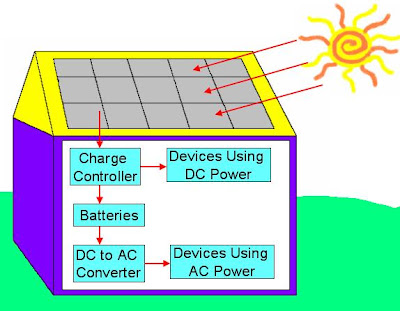
Solar panels on every roof can produce CO2 free electricity.
 Electric cars can be recharged free with solar power.
 Wind power is another easy electric power generator.
 Solar thermal heat provides steam for power generation.
 Wind and waves combine to produce electricity.
 River turbines capture the power of water.

There are only two ways to live your life.
One is as though nothing is a miracle.
The other is as though everything is a miracle.
…Albert Einstein…


When the
Angel of Death
comes for you…
smile at him
 Elon Musk (born 1971) is an American engineer, entrepreneur and philanthropist best known for co-founding PayPal, SpaceX and Tesla.
 He is currently the CEO and CTO of SpaceX, CEO and Product Architect of Tesla Motors and Chairman of SolarCity.
 Nikola Tesla (10 July 1856 â 7 January 1943) was an inventor and a mechanical and electrical engineer. Tesla was born in the village of Smiljan near the town of GospiÄ, Austrian Empire, Croatian Krajina. He was an ethnic Serb subject of the Austrian Empire and later became an American citizen. Tesla is often described as an important scientist and inventor of the modern age, a man who “shed light over the face of Earth”. He is best known for many revolutionary contributions in the field of electricity and magnetism in the late 19th and early 20th centuries. Tesla’s patents and theoretical work formed the basis of modern alternating current electric power (AC) systems, including the polyphase power distribution systems and the AC motor, with which he helped usher in the Second Industrial Revolution.
After his demonstration of wireless communication (radio) in 1894 and after being the victor in the “War of Currents”, he was widely respected as one of the greatest electrical engineers who worked in America. Much of his early work pioneered modern electrical engineering and many of his discoveries were of groundbreaking importance. During this period, in the United States, Tesla’s fame rivaled that of any other inventor or scientist in history or popular culture, but due to his eccentric personality and his seemingly unbelievable and sometimes bizarre claims about possible scientific and technological developments, Tesla was ultimately ostracized and regarded as a mad scientist. Never having put much focus on his finances, Tesla died impoverished at the age of 86.
The SI unit measuring magnetic flux density or magnetic induction (commonly known as the magnetic field “B”), the tesla, was named in his honor (at the Conférence Générale des Poids et Mesures, Paris, 1960), as well as the Tesla effect of wireless energy transfer to wirelessly power electronic devices which Tesla demonstrated on a low scale (lightbulbs) as early as 1893 and aspired to use for the intercontinental transmission of industrial energy levels in his unfinished Wardenclyffe Tower project.
Aside from his work on electromagnetism and electromechanical engineering, Tesla has contributed in varying degrees to the establishment of robotics, remote control, radar and computer science, and to the expansion of ballistics, nuclear physics, and theoretical physics. In 1943, the Supreme Court of the United States credited him as being the inventor of the radio.

Nikola Tesla (10 July 1856 â 7 January 1943)