
Metropolis is a 1927 German expressionist epic science-fiction film directed by Fritz Lang. The film was written by Lang and his wife Thea von Harbou, and starred Brigitte Helm, Gustav Fröhlich, Alfred Abel and Rudolf Klein-Rogge. A silent film, it was produced in the Babelsberg Studios by UFA.
Metropolis is regarded as a pioneer work of science fiction movies, being the first feature length movie of the genre.
Made in Germany during the Weimar Period, Metropolis is set in a futuristic urban dystopia, and follows the attempts of Freder, the wealthy son of the city’s ruler, and Maria, whose background is not fully explained in the film, to overcome the vast gulf separating the classes of their city. Metropolis was filmed in 1925, at a cost of approximately five million Reichsmarks. Thus, it was the most expensive film ever released up to that point.
The film was met with a mixed response upon its initial release, with many critics praising its technical achievements and social metaphors while others derided its “simplistic and naïve” presentation. Because of its long running-time and the inclusion of footage which censors found questionable, Metropolis was cut substantially after its German premiere: large portions of the film were lost over the subsequent decades.
Numerous attempts have been made to restore the film since the 1970s-80s. Giorgio Moroder, a music producer, released a version with a soundtrack by rock artists such as Freddie Mercury, Loverboy and Adam Ant in 1984. A new reconstruction of Metropolis was shown at the Berlin Film Festival in 2001, and the film was inscribed on UNESCO’s Memory of the World Register in the same year, the first film thus distinguished. In 2008, a damaged print of Langâs original cut of the film was found in a museum in Argentina. After a long restoration process, the film was 95% restored and shown on large screens in Berlin and Frankfurt simultaneously on 12 February 2010. (read more)


Sir Christopher Frank Carandini Lee, CBE, CStJ (27 May 1922 â 7 June 2015) was an English actor, singer, and author. With a career spanning nearly 70 years, Lee initially portrayed villains and became best known for his role as Count Dracula in a sequence of Hammer Horror films. His other film roles include Francisco Scaramanga in the James Bond film The Man with the Golden Gun (1974), Saruman in The Lord of the Rings film trilogy (2001â2003) and The Hobbit film trilogy (2012â2014), and Count Dooku in the final two films of the Star Wars prequel trilogy (2002 and 2005) and Star Wars: The Clone Wars (2008).
Lee was knighted for services to drama and charity in 2009, received the BAFTA Fellowship in 2011 and received the BFI Fellowship in 2013. Lee considered his best performance to be that of Pakistan’s founder Muhammad Ali Jinnah in the biopic Jinnah (1998), and his best film to be the British horror film The Wicker Man (1973).
Always noted as an actor for his deep strong voice, Lee was also known for his singing ability, recording various opera and musical pieces between 1986 and 1998 and the symphonic metal album Charlemagne: By the Sword and the Cross in 2010 after having worked with several metal bands since 2005. The heavy metal follow-up titled Charlemagne: The Omens of Death was released on 27 May 2013. He was honoured with the “Spirit of Metal” award in the 2010 Metal Hammer Golden God awards ceremony. (read more) (christopher lee filmography)
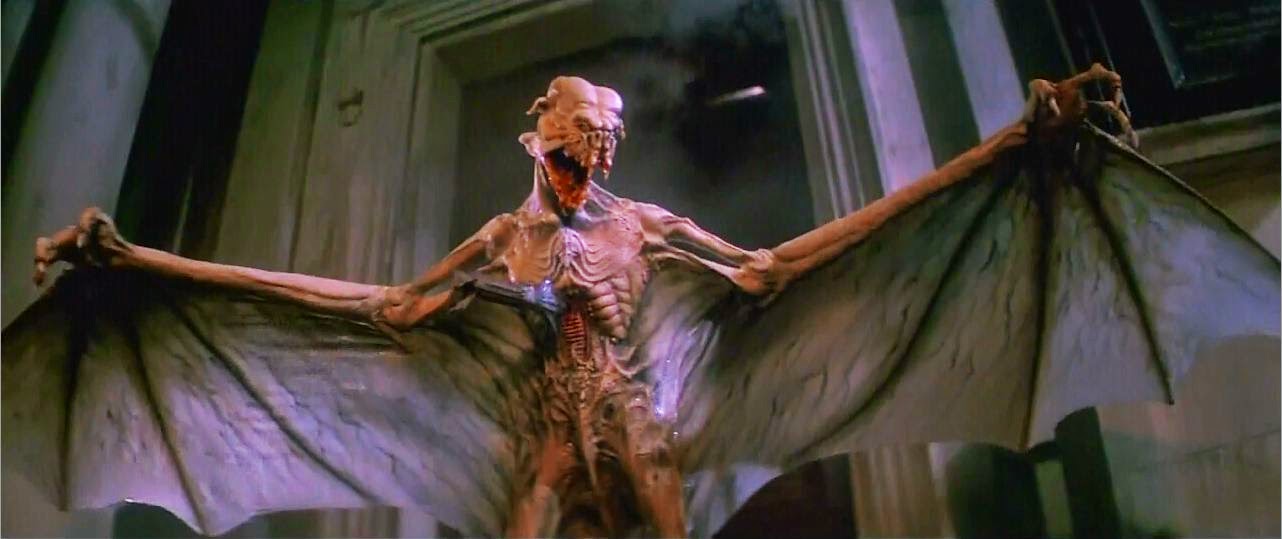
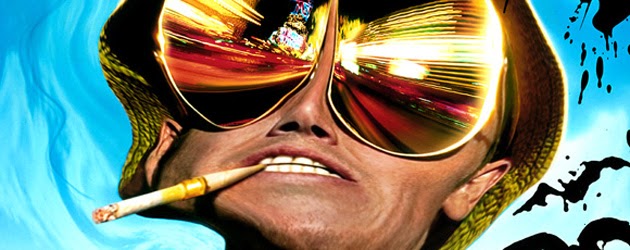
“We were someplace around Barstow on the edge of the desert when the
drugs began to take hold. I remember saying something like I feel a bit
lightheaded; maybe you should drive . . . And suddenly there was a
terrible roar all around us and the sky was full of what looked like
huge bats, all swooping and screeching and diving around the car, which
was going about a hundred miles an hour with the top down to Las Vegas.
And a voice was screaming: Holy Jesus! What are these goddamn
animals?” (hunter s. thompson) (movie trailer)
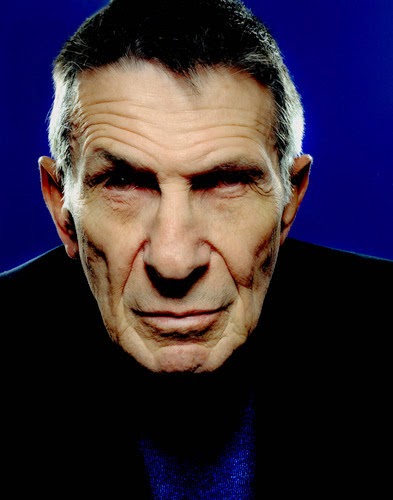
Leonard Simon Nimoy (March 26, 1931 â February 27, 2015) was an American actor, film director, poet, singer and photographer. Nimoy was known for his role as Spock in the original Star Trek series (1966â69), and in multiple film, television and video game sequels.
Nimoy was born to Jewish immigrant parents in Boston, Massachusetts. He began his career in his early twenties, teaching acting classes in Hollywood and making minor film and television appearances through the 1950s, as well as playing the title role in Kid Monk Baroni. Foreshadowing his fame as a semi-alien, he played Narab, one of three Martian invaders in the 1952 movie serial Zombies of the Stratosphere. From 1953-1955, he served in the United States Army.
In 1965, he made his first appearance in the rejected Star Trek pilot The Cage, and went on to play the character of Mr. Spock until 1969, followed by eight feature films and guest slots in the various spin-off series. The character has had a significant cultural impact and garnered Nimoy three Emmy Award nominations; TV Guide named Spock one of the 50 greatest TV characters. After the original Star Trek series, Nimoy starred in Mission: Impossible for two seasons, hosted the documentary series In Search of…, and narrated Civilization IV, as well as making several well-received stage appearances. More recently, he also had a recurring role in the science fiction series Fringe.
Nimoy’s fame as Spock was such that both of his autobiographies, I Am Not Spock (1975) and I Am Spock (1995), were written from the viewpoint of sharing his existence with the character.
Nimoy’s greatest prominence came from his role in the original Star Trek series. As the half-Vulcan, half-human Spockâa role he chose instead of one on the soap opera Peyton PlaceâNimoy became a star, and the press predicted that he would “have his choice of movies or television series”. He formed a long-standing friendship with Shatner, who portrayed his commanding officer, saying of their relationship, “We were like brothers.” Star Trek was broadcast from 1966 to 1969. Nimoy earned three Emmy Award nominations for his work on the program.
He went on to reprise the Spock character in Star Trek: The Animated Series and two episodes of Star Trek: The Next Generation. When a new Star Trek series was planned in the late 1970s, Nimoy was to be in only two out of eleven episodes, but when the show was elevated to a feature film, he agreed to reprise his role. The first six Star Trek movies feature the original Star Trek cast including Nimoy, who also directed two of the films. He played the elder Spock in the 2009 Star Trek movie and reprised the role in a brief appearance in the 2013 sequel, Star Trek Into Darkness, both directed by J. J. Abrams.
Spock’s Vulcan salute became a recognized symbol of the show and was identified with him. Nimoy created the sign himself from his childhood memories of the way kohanim (Jewish priests) hold their hand when giving blessings. During an interview, he translated the priestly blessing from Numbers 6:24â26 which accompanies the sign and described it during a public lecture:
May the Lord bless and keep you and may the Lord cause his countenance to shine upon you. May the Lord be gracious unto you and grant you peace. The accompanying spoken blessing, “Live long and prosper.” (read more)


Frankenstein; or, The Modern Prometheus, is a novel written by English author Mary Shelley about eccentric scientist Victor Frankenstein, who creates a grotesque but sentient creature in an unorthodox scientific experiment. Shelley started writing the story when she was eighteen, and the novel was published when she was twenty. The first edition was published anonymously in London in 1818. Shelley’s name appears on the second edition, published in France in 1823.
Shelley had travelled through Europe in 1814, journeying along the river Rhine in Germany with a stop in Gernsheim which is just 17 km (10 mi) away from Frankenstein Castle, where two centuries before an alchemist was engaged in experiments. Later, she traveled in the region of Geneva (Switzerland)âwhere much of the story takes placeâand the topics of galvanism and other similar occult ideas were themes of conversation among her companions, particularly her lover and future husband, Percy Shelley. Mary, Percy, Lord Byron, and John Polidori decided to have a competition to see who could write the best horror story. After thinking for days, Shelley dreamt about a scientist who created life and was horrified by what he had made; her dream later evolved into the story within the novel.
Frankenstein is infused with elements of the Gothic novel and the Romantic movement and is also considered to be one of the earliest examples of science fiction. Brian Aldiss has argued that it should be considered the first true science fiction story, because unlike in previous stories with fantastical elements resembling those of later science fiction, the central character “makes a deliberate decision” and “turns to modern experiments in the laboratory” to achieve fantastic results. It has had a considerable influence across literature and popular culture and spawned a complete genre of horror stories, films, and plays.
Since publication of the novel, the name “Frankenstein” is often used to refer to the monster itself, as is done in the stage adaptation by Peggy Webling. This usage is sometimes considered erroneous, but usage commentators regard the monster sense of “Frankenstein” as well-established and an acceptable usage. In the novel, the monster is identified via words such as “creature”, “monster”, “fiend”, “wretch”, “vile insect”, “daemon”, “being”, and “it”. Speaking to Victor Frankenstein, the monster refers to himself as “the Adam of your labours”, and elsewhere as someone who “would have” been “your Adam”, but is instead “your fallen angel.” (read more)
