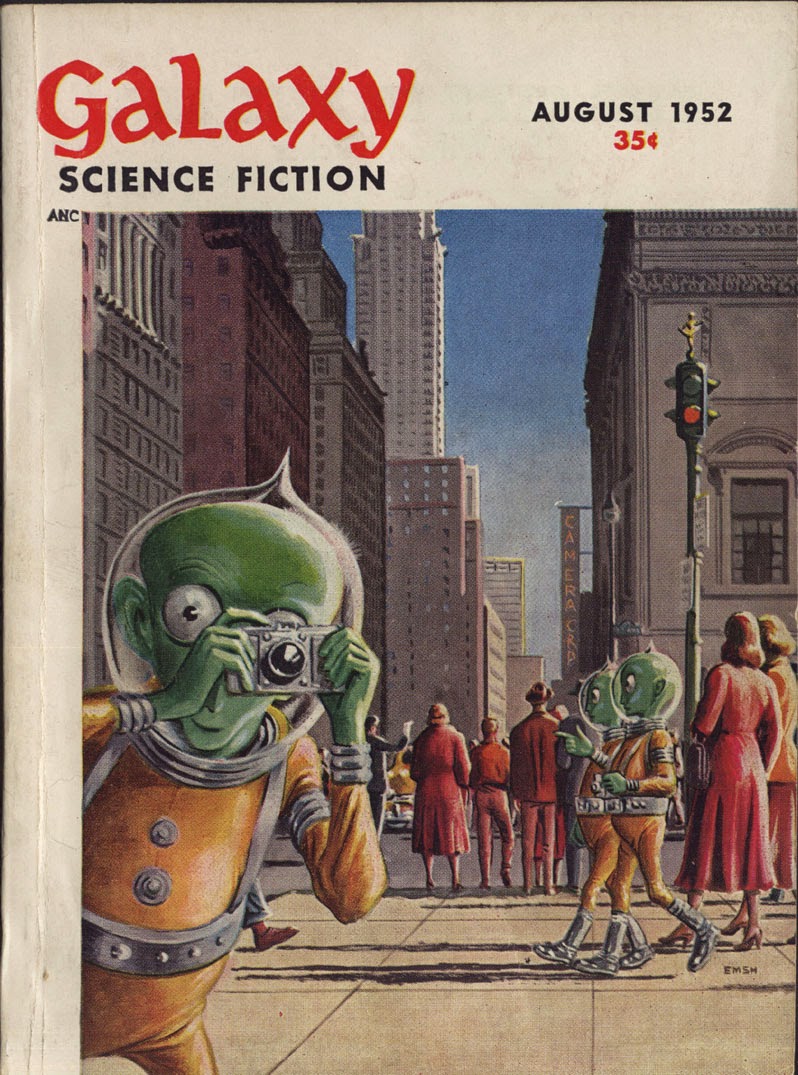
I watched live as Neil Armstrong was walking on the moon. Like every 11 year old boy in the western world I was a part of the team that day. That sense of wonder and confidence in government, science and human will peaked for humanity July 20, 1969. If aliens landed in Times Square this afternoon people would be excited, but most sophisticated consumers of popular culture, would react by saying âwhat took you guys so longâ. Most pundits look back at this accomplishment as proof we 21st century humans are moving backwards. Why are we not on Mars? Why does the US have to hitchhike to the Flying outhouse.
NASA got lost in Marketing over Mission. It made little scientific sense to continue boosting men into orbit, but from a propaganda side it was gold pure gold. If the Saturn program had been continued launching robotic craft, and if with the left over change new propulsion and life support system had been researched, we might have arrived in the future by 2012.
The body politic mourns for the good old days of can do America. Well there was an unsustainable load of baggage being carried by the USA in 1969. Nixon was running the place and a crazy bleeder bleeding the country out in Vietnam. Hard lessons were learned. Now what if JFK had not been assassinated? What if he stood up to the military industrial complex? What if he had put America on a Singaporean type benevolent capitalism glide path? Imagine, just imagine.
There may still exist people like Neil Armstrong and his breed, but I doubt it. Vietnam and Nixon destroyed that DNA. However we have gained far more than we lost, but the danger is we are losing everything we gained, and the backwards momentum does not promise us a force of Neil Armstrongâs. No we are getting a New Generation of Nixonâs or worse. RIP Neil Armstrong the last American hero with the gravitas and grace worthy of uncritical adoration.
Our version of JFK says “in fourscore and four years we might free ourselves from Carbon or not”

When I was 18 years old, me and two of my buddies decided that we were going to climb Mt. Signal. Even though it’s only 2,300 feet to the top of Mt. Signal it looked like Mt. Everest to us. Being the young bucks that we were, we thought it the thing to do to prove our manhood. Temperatures in the Imperial Valley hit 90 to 110 during the day so we started early in the morning, figuring to make the summit by noon and get back down before nightfall. We started up one foot in front of the other, boulder by boulder, it was a good climb and we gained a hundred feet of altitude every ten minutes. Half way up we looked around and thought, maybe we’ve bit off more than we can chew, but we kept on climbing. We made the summit right around noon and took in the view. 2,300 feet in the air it was if we were in an airplane flying over the perfectly flat fields of the Imperial Valley, we were in awe of what we had accomplished. Standing before the shrine with it’s cross at the summit we knew we were somebody, we knew that we mattered. I picked up a couple of rocks and put them in my pocket, then we started the climb down. It was like floating on air, we bounded from boulder to boulder gravity assisted and flew down the mountain. Without seeming effort we glided as if on wings toward the base, in a trance like state time slowed down, as if in slow motion every stone was alive and a step back to reality. We arrived in the real world and realized that we were men and began our journey, we had arrived ! (read more)
 |
| I was always a Betty man Really |
ISIS like foes are not among stist
those we have in the West
come up against
Al Queda was bad
and for Osama to hide
we must decide
if it was Allah
or the CIA
that gave him such astounding
relief
that gave him such astounding
relief
that allowed him to abide
like the worlds baddest dude
with a world class bad attitude
for more than a decade
is a safe mansion in Pakistan
located not a stones throw
from the garden city
that was one of the few
places in that troubled
shithouse poorly planned
nation built on sand
where gardens grew
and the streets were not full
If you our me
was to live Paki (Pakistan Pekoe not racist)
we would want to rent
Osama Bin Ladins House
So with no other serious enemy to fight
we fought Al Queda
with all our might
behavioral experts might disagree
but making people take off
their belts and shoes
might give them a PHD
in Sheeple agree.
Then Obama ended
two open ended wars
that had not traction
We had a brief history
in time where terrorism
from black hoodies and nijab
was not a distraction
Yep for a brief moment in time
the most important powerful people in the world
where not occupied by the Flintstones.
Believe it or not it started with Eisenhower
This was the American who saved the world
He really did
Herding Cats is a backwash
tending to your pool
This man had command
and he made fools into tools
as if you want to move
forward you must do
over and over
no matter how hard
it upsets your
basic rules
Well it seems Eisenhower was
not Einstein an
and despite what he believed
the forces that be
determined he was dangours
he believed in democracy
his experience at slaying fascism
was not a novel the money men
would read
or even in a drug induced
water boarded interrogation
agree
There is so much money
I can survive pain
and potential death
endlessly
Just as a aside that’s how I see myself
not going to give up my friends
or my country no matter what
tool you pull of the shelf.
Now back to history. Eisenhower had
defeated the Nazi, and planned events
that could never be duplicated
he was the Beatles of warfare
Sun Tzu
would burn some paper for this mother fucker
So naturally and fallowing the U Grant events
and many other great Presidents
he took control
But history has no record
of why he selected
a man a faint heartbeat
away like Richard Nixon
That would be an incredible
conversation with Eisenhower
who had take Hitler down
now had to wear
Nixon on his crown
Hey its all politics
and do not pay close
attention
all pols are the same
and you should vote
for the one close to your heart
Skeptics in the recently rated
third best city in the world
take Rob Ford as a pill
that proves not so smart
Skeptics in the recently rated
third best city in the world
take Rob Ford as a pill
that proves not so smart
So Eisenhower is sandtrapped
with Nixon and he starts to golf
I think he was brokenhearted
and did not give a fuck
He could not speak the truth
case he took a spin on jeep
with a girl that was not
his wife
Now we have Eisenhower
a good guy in most ways
An American Icon
cause hate them
as you must
Americans have
moved the ball down
field
fumble after fumble
but that is why
in history we must trust
I was not there
but I am sure it was true
the Military Industrial Complex
wanted to make sure
there was no rust
on the ROI
there was no rust
on the ROI
Ike was not one to take the mike
and he said bullshit will not make rules
reality distortion fields
I have smashed a thousand
and I will never bend ove4r
for punks like you.
Little Dick the concubine
and
and
the President shared in the heritage line
May not have been patients
maybe he did not want
to sit in line
maybe he would be the first Vice President
warmer than a bowl of piss
his urine fueled heat fried democracy
big time
his urine fueled heat fried democracy
big time
Frances Gary Powers got shot down
and Eisenhower was surrounded
and he knew he had to drop the dime
he had fought a world war
and when the truth
and power conflict
you got to take out
a tape measure and
examine your dick
How many inches or millimeters
do you want to give away
do you want to give away
when the battle is already
fought and despite your no aquencient
you are rated Napoleon for you strong thought.
If I play Civilization being Eisenhower is far above
Dan Quale, Napoleon and any Kings or Queens
that are only legitimate because
they have support from above
or now when that fortress is breached
a tourist attraction that can sign off
on laws as well
So Ike being the man probably said
I have fought Nazi with weapon
all your Ayn Rand nonsense
leaves me wondering why
I am a conservative instead
of a liberal who do
their thinking with best practices
dreaming of a world
where you buy what you want
dreaming of a world
where you buy what you want
not what the paymaster said
History records that the the the the
great concord that Eisenhower
had almost cemented with Soviets was dead
When Frances Gary Power hit the ground
and in fact was not dead.
The Soviets could have just
killed this terrorist spy
but they kept him alive
and traded him
for a colder cold war
this was nonsense for the Soviet
who could barely keep a fridge
with a kitchen door
You look at Goebbles and operation paperclip
and wall street today
and how we are manipulated
and never see
even the simplest trick.
Tricks and cons and bullshit
our parents would have just shrugged
off as part of the permanent SNAFU
unfortunately today
a sizeable majority believe
and the rest of the pie
and the rest of the pie
are afraid
if they complain
they will have
a police response
based upon the NSA
and guilty or innocent
and guilty or innocent
it do not matter much when
your brain is filled with
a slug from a gun
that in Iraq was full
of ammunition but in the
end saved no one.
Eisenhower and Nixon must
have a had a conversation
that pushed them both over the brink
Maybe it was the Checkers speech
a pooch make Eisenhower
History records that
Frances Gary Powers
was shot down
there is a lot of confusion about
that event
and more importantly how did it happen
and was Eisenhower cool
with taking such a provocative action
in the middle of talks
that would have led to peace
and certain retirement
for the Industrial Military Complex
freaks
We only have a few facts
about this past time
one of the most significant
is that a highly trained
radar expert was in the USSR
at this time.
A pasty had defected
and we would not hear
of him again
until that day
which under all the clouds
of confusion
no one disputes
JFK had brain matter
Little terrorist before
that term had been defined
Lee Harvey Oswald
traveled back and forth
between two nations
zeroed in on a nuclear war
Even accidental tourists
Even accidental tourists
with the best credentials would
be hard pressed to cross those lines
So Lee Harvey Oswald
shot JFK
its that simple
and no matter hard
you study history
the fact on the ground
have made it certain
that it was a good kill
examined to death
and only crazy
people would see it
any other way.
Just as an aside
I found it very interesting
that Stephen King
looked at all the facts
and decided that history was on the single
shooter side. What more proof do you need
an award winning excellent author
has written a book
with which the Warren Commission
would agree
JFK died in Dallas
and then in my book
Jaguline became the creepiest bride
Aristotle are you serious
this was prostitution
carried out on the grand culture side
The greatest man from Texas
was not power hungry
no he resigned never severed
two terms
I guess we all estimated
his power function
and how
they never surrender
he took the first opportunity to leave
maybe he thought his head intact
looked better on reflection
or maybe he just gave up on power
what a nice historical introspection
Nixion became president
it was like Sid Vicious
filling in for John Lennon
This little punk
was not going to be
told
you should go this way
He had so many enemies
the Rolex was doomed
only a computer could keep track
and facebook was born this way
I think tricky Dick knew
the way to play
more than a fur coat
or a puppy dog
he wanted some say
in the big universe
and as President he assumed
it would go that way
I image he was so disappointed
by the first visit of the men in black
they wanted him to do so many
things that conservatives would attack
Peace with China fuck that.
Dick did not care how many consumer devices
they could make with a battery pack
Yet he flew to Beijing
and started the downward spiral of everything
He made a deal with the communists
who liked the label
but at the end of the day
are only the people
who do not wane
they are so tough
there is nothing
in the package
they want that
will make them sane.
Little Dick came from bumfuck
he did not see the deal
for his people playing this game
So the plumbers made Watergate
and the rest is history
assets leaked
and pressure grew
and at the end of the day
the Bushes outlived Reagan
and we are now close to the modern say.
Reagan wanted peace with Gorby
for all his simple minded dementia
this was one thing he knew
was true.
Well someone sabotaged that
and you can bet there was a shrub
behind that attack.
Bush takes command
a direct line behind
shot down at 19
and Finance
and Preston
and everything
Command proves to be a little tricky and
he fails in the flack publicly
but in the background
lots of ammo left
for attack
So his unfortunate son
like the lyric from
credence Clearwater revival
defeats green peace
Now thanks to him
we are locked in a cycle
of war that’s hard to break
the only grace
is Adam Smith
and his invisible hand
you can not fight wars endlessly
on foreign lands
if there is no profit
in all those bleached bones.
So when you see on the new
Saddam is launching babies
out of incubators
or someone in a cave
is thirty seconds away
from digging your grave

Cognitive Dissonance Danger, you know the drill:avoid contact if you cant handle the truth.
Subject the battle between Nihilism and organization.
The Nihilist are winning, and wining by billions. But its the organalizist that are reaping all the rewards. The organized ones are manufacturing Nihilist. It is the perfect divide and conquer.
Tom thought about changing his interface and it happened, his level of augmentation was in now in God mode. He was now able to switch all his senses to a quantum computed dream zone where the owner was the architect of his own game. Players using a simple sandbox could travel through others prescribed adventure or with a few menu choices create their own dream masterpiece like their metaphor for Falling Water or the Eiffel Tower.
The company on a payment plan of just $1000 per month upgrade the sensory interface and antenna. Its a very organic biological solution, the designer called it the God Organ. Regretfully he retracted that characterization late. Most still called it that in particular Pastafarians like Tom.
Level one content only allows the user to play single player or locally networked games. Then it was extra to travel to the Alternative Earth You web access. Exclusively allowing an infinite number of players to meet up for an infinite number of experiences. Live God level was huge upgrade over Angel. Angels experienced as a viewer, Gods as a participant. Angels would watch athletes and Entertainers perform in the third person, Gods was purely fist person, though you could toggle if one wanted to watch oneself. Good friends often bonded over the shared experience of feeling a historical event as star of its creation. Alternative Earth You owned Billions of people intimately sharing a common experience that is transformed into a replayable searchable benchmark in the zeitgeist.
This week it being the auspicious date, the hundred birthday of a star. Tom has purchased Angel level hit I am sitting on Keith Richards guitar and he is shaking it so I hard, Tom is riding a roller coaster. like piloting a fighter plane, while the crowed roars and screams, just as real as your best dream upon command.
Tom was way over budget for Alternative Earth You this month. His wife Jerry would not be happy, but they would not be the first couple pulled way beyond their means to an addiction that no one ever suspected would become a real world affliction. That’s what Tom was thinking about as he thought authorized the payment to the Bitcoin collecting nemesis. Tom always argued Philip K Dick when people said no one could have imagined the consequences a company like Alternative Earth You. To strengthen his case Tom always prefaced the central argument with some historical evidence.
“knowing what we know now about 911 its not hard to imagine powerful people trying to create an alternative reality. My favorite is Condelezza Rice. The National Security Advisor was appointed to be the sharpest point on the spear, or was She. In one of history greatest gaffes Secretary Rice reassures the nation that “no one could have imagined passenger aircraft used as missiles”
Next to the Kennedy assassination 911 was the top argument arena. Tom usually purchased a Churchill Avatar rigged with all the options. The Oxford Debate world had many great purchase opportunities and Churchill was the most popular. The Roppongi neighbor hood was the zone where Tom earned his lively hood.
It was not known as Roppongi for geographic reason. The real Roppongi is famous for having uncountable thousands of tiny bars, dioramas with barely room for a dozen customers. It is famously said in Roppongi a Yankee fan can find a bar dedicated to Mickey Mantle fans from Omaha. Net Roppongi is a similar collection of esoteric bits.
It was not known as Roppongi for geographic reason. The real Roppongi is famous for having uncountable thousands of tiny bars, dioramas with barely room for a dozen customers. It is famously said in Roppongi a Yankee fan can find a bar dedicated to Mickey Mantle fans from Omaha. Net Roppongi is a similar collection of esoteric bits.
If a pre company citizen saw Tom at the local legion on stage hotly debating with any one of the millions of anti-conspiracy theory paid trolls, they would head straight for the dartboard.
In contrast even the least educated nihilist would sample a little of Churchill debating GWB over the official 911 narrative. This was Tom working on God level. People like Tom parlayed up for their Churchill Avatar, then got paid by trolling with acid or flower persuasion. Even without the company getting their slice it was a hard way ahead for most.
If his presentation was liked enough he would be contracted by the second to content one the talking heads in the ongoing live debate. Angels would now see his Avatar behind the podium at Oxford debating the subject of the day. Angel mode was the popular choice for informed debate. A point of view voluntarily chosen by the surprisingly few that preferred to be informed instead of taking a side in the argument. Without the bonus Tom got from uplifted moments, the job would not be worth doing.
Being a AEY troll was a mercenary life. Contracts by the issue, bonus based on likes, popular trolla could get a very nice taste of the action just showing up on a public affairs site. Other trolls were of a less subtle license.
Even though the Roppongi Group was very strict about advertising allowed into a Sandbox, Troller hackers could evade and invade a site and insert a influential persuasion element into an experience. Once they become your friend its easy for them to push you in their direction. All the big brands that remained put serious money into Alternative Earth You Trolls.
Most governments denied using trolls and in Europe it was illegal for Political Parties to troll. Users went ballistic if they caught a government troll, but just like lying the practice continued because it was proven to effective at getting elected.
Tom and Jerry went God level live to Waikiki Beach a few days ago. Immediately they were approached by a pair of Troller Hackers offering them the Hawaii humanity could never imagine. Toms looked like Rachel circa Incredible Journey and comming on to Jerry Mel the roadwarrior. In less time than a pirate banner add on the cheapest site is corrected, the fake Raquel and Mel were removed. For a little more users had the option to choose their execution. The most popular choice were a variety of sword and shotgun eliminations. Tom did not troll hack , he had done it before but it was the lowest and least rewarding form of trolling. Even a government troll could claim a higher purpose.
Tom and Jerry had a very nice income. He doing better than expected for a trolling Churchill Avatar. Jerry a upper middle class of reward due too a content creator. Jerry’s niche sandbox was full of 18th century adventures. Her highest rated experience was called Shipwrecked sailor of the Spanish Armada. Like the experience Jerry loved and lived often in both Irelands. In 18th Century Ireland Tom may have faced alcohol addiction. In twenty first Century Canada less than ten percent of citizens would be reality impaired. It was much totally more healthy and more pleasant to abuse the stimulant opportunities that could be purchased from Alternative Earth You. Modern citizens faced the most diabolical of addictions, themselves.
In addition to being an unremarkable troll Tom was a Montreal Canadians Addict, The live buys where like crack. All the players sensory nerves are captured. Tom usually watched as the Captain, Alex Galchenyuk. With the Canadians once again being a powerhouse it was the worst possible time to fight his form of Addiction. They were spending over thirty grand a month on the internet.
Jerry with her classic low narcissistic profile preferred more time on the reality side. Of course they had many adventures together but forking out to the company for God class at a hockey game. even a playoff game, was not her idea of money well spent.
Tom like most suspected a shadow government used price controls to keep price of the best experience beyond the resources of the many. Tom like the few actually cared about it. Jerry would roll her eyes and point out the government warning every time you switched on recommended no more than three hours out of your body in a single day. Everyone ignored the warring. None of the cases before the court had found Alternative Earth You responsible for any of the consequences of their service.
Tom had tried quitting the Canadians before, watching from the cheap seats or even with those who could not pay for an implant. Even if he chose some games from the Chockula decade it was no use. Five seconds of the game action and he tweaking his way to the suspension pool, thinking his way to upgrade. In a nano second Rocket Richard had reviewed his credit and psyche profile before asking him with eyes fully blazing to authorize the upgrade, and there you go. So it goes So it goes.
Jerry came home at nightfall after a day of walking her Irish backgrounds, ready to metaphorically kill Tom if he was looking in Alternative Earth You. She found Tom just as she expected lying there like a character from Alerted States completely submerged in the suspended animation chamber, breathing tube in and arms and legs flailing madly . She checked the settings, his heart rate was over 130 at least he had the game set on high. Tom was living hockey history. The most expensive hockey experience is Paul Henderson Game 7 Canada Russia 1972. Suddenly Tom was alone. devoid of sense and sensation. The unit fails to clean and dry him so quickly he springs through the hatch.
“Jerry you can give a guy mental problems yanking him out of the game like that, I was just working out”
Jerry replies ” What the hell is wrong with working out with yesterdays game for free?”
Tom wishes he was Churchill.

This work is licensed under a Creative Commons Attribution 4.0 International License.

I am singing that love song again
You know my belle
I would change the universe
on its axis
making positive negative
and gravity just a
talking point thing
If I could capture
your heart again
and feel your
angel pulse beating against
my soul as well
together not quite sweaty
Some kind of glistening
I will always remember
your skin
Not meeting the threshold of wet
no a magical kind of moist
a mucous layer of love conformation
yet not by any means dry
It was some kind of CGI anomaly
that I saw with my loving eye.
Who do! Who do you want?
Who knows what the future brings
Who does I have to conceive
Like Jesus
to make you want to believe
That all my many bad decisions
were all given to make
the humanity succeed
but my goal was always
to give you more than I receive
I want you
cause my religion and resurrection
would be hell
if I was not putting
my mind into
yours as well
So BSG like
Starbuck arriving
on ancient earth
and not feeling well
she apparently went
to heaven
but me and my blu ray
went to hell.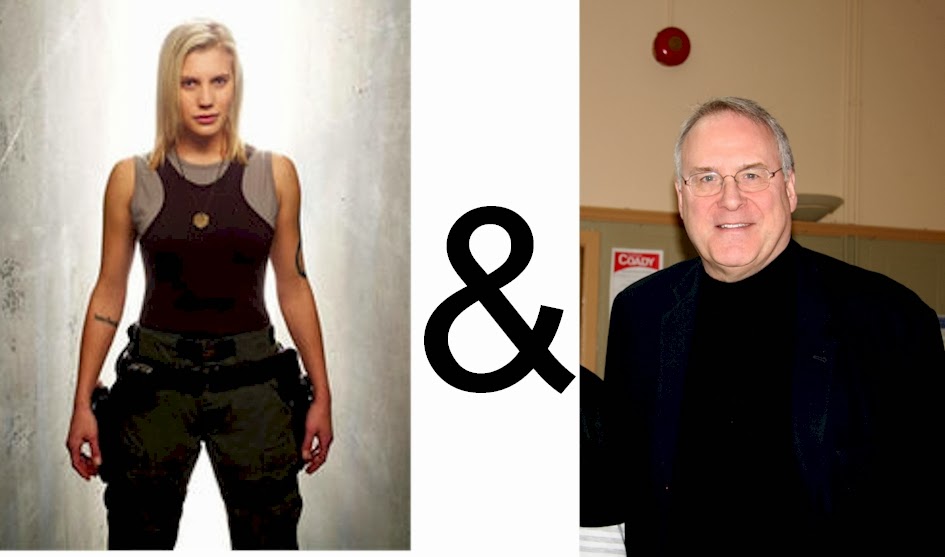
making positive negative
and gravity just a
talking point thing
If I could capture
your heart again
and feel your
angel pulse beating against
my soul as well
together not quite sweaty
Some kind of glistening
I will always remember
your skin
Not meeting the threshold of wet
no a magical kind of moist
a mucous layer of love conformation
yet not by any means dry
It was some kind of CGI anomaly
that I saw with my loving eye.
Who do! Who do you want?
Who knows what the future brings
Who does I have to conceive
Like Jesus
to make you want to believe
That all my many bad decisions
were all given to make
the humanity succeed
but my goal was always
to give you more than I receive
I want you
cause my religion and resurrection
would be hell
if I was not putting
my mind into
yours as well
So BSG like
Starbuck arriving
on ancient earth
and not feeling well
she apparently went
to heaven
but me and my blu ray
went to hell.

I apologise to everyone if I fucked up this message
but you should know one thing in this exchange
my message was from GOD!!
Global Love Think Tank
my first post
think tank cherry broke
what do the remains
look like
something non partisan
something from the heart
some kind of intelligence
that cant be measured
on a pie chart
Thinking about love
on a global scale
is scary science
way worse than economics
at least those parishioners
have word equations
upon which they can
wail
love is an emotion
so far no scale
null established analytics
of push back
expect the opinion of the
mentally challenged doctors
who work on the fringes
of humanity
because although
every human who is self aware
thinks they are the crazy one
its not really true
we just understand the world
or get lost in consumptive irritation
thinkaboot something bigger
than ones self
usually to no avail but
its a journey we are compelled
to make
and no one
can fake
The greatest quote about love
ever comes from the late great
and largely unlamented
genius Warren Zevon
Love you cant start it like a car
and you cant kill it with a gun
and that’s the problem
with analytics
and measurement
that defines our life today
there is no place for love
in the calculation
Hate on the other hand
is factored in daily
with increasing scoops
of false news breaking
upon every shore
even those like the Japanese
who thought they had
build a barrier to the
tsunami
but got Fukushima’s
endless lifetime
Fact is fact and most people
do not realize what they know
as a matter of fact
its so easy to begin
so hard to end
its easy to destroy
so hard to build
its so easy to hate
and so hard to love
I love this mother fucking bad assed world
and I have seen most of its best parts
and a few of its toilets
and can never decide
who made the mess
and who should provide
three ply tissue
to the global single ply
divide
Call me a fascist super state
socialist meritocracy supporter
but I love Singapore
and in the Global think tank love
scale of my imposition
they would come out number two
in any decision
if you wanted to raise people
from misery to Trump status
they would be number one
When my number come up
and I have lived this life
its not just a supposition
if I have to choose from my
polyglot passports and the kick backs
I get from being a citizen of the world
I am a Canadian
and my Canada contains Quebec
there is no doubt in my mind
that the Anglos who rule the planet
have kept Quebec behind
because they could not speak
the language of diplomacy
let alone
hear the amour
In my humble opinion
if I think tank love
I know Austria
is the best
but it may make
me a racist too
cause I love my people
and we have a system
if all is not in ordung
red flags all the day
and some fires
you can not put
out with social
justice
Just want to qualify
Austrian are totally empathetic
and love the world more than the
Germans at least
its a culture the whole world
should embrace
In Austria if you loose
your loose change
it will come back
to you with interest
I can speak many languish poorly
but have learned that what they
say is as important as the swordsman
facing the word
if you want to defeat
humanity
or get laid
or get laid
We have many think tanks in this world
very well funded and pushing us
to forget about the ozone layer
or anything relevant
to human survival
and still omnipotent
so are the Fraser Institute, Heritage fucks, American Prosperity Institute
and a billion other tax break mouth breathing mother fuckers of this planet
going for some long term plan
that culls the herd
they have been practicing
there for so many centaurs
they have grown weary
of humanity
and seek a final sustainable solution
where the head are essentially in jars
and the robots live
viciously tier one life on Mars
or skiing down the slopes of Everest
from the top
but what happens when they get bored
War
pedophilia and the lash
JJ captured this perfect
in Game of Thrones
Can we fight our biological DNA
that is the question I want to answer
at Global Love Think Tank
because I sincerely believe
we are what we eat
and we exist as we think

We can do it all today
we do not need no
stinking future
but why not?
Cause some rich ass holes
like living like Gods
and it admit it
we are wired that way
but the Star Trek system
which I believe
the educated will call
communism is the answer
Probe the people in the barrio
they are happier and more content
than those living in glass towers
on the top floor
with glass walls
and guilty conscience
Communism has never actually been tried
democracy has been
and it Germany it seems successful;
but with tech
it will be obsolete
so we will need a new model


Near-true-color image of Pluto taken by New Horizons spacecraft on 13 July 2015. On 14 July 2015, the New Horizons spacecraft became the first spacecraft to flyby Pluto. During its brief flyby, New Horizons made detailed measurements and observations of Pluto and its moons.
Pluto was discovered in 1930 by Clyde Tombaugh, and was originally considered the ninth planet from the Sun. After 1992, its status as a planet fell into question following the discovery of several objects of similar size in the Kuiper belt. In 2005, Eris, which is 27% more massive than Pluto, was discovered, which led the International Astronomical Union (IAU) to define the term “planet” formally for the first time the following year. This definition excluded Pluto and reclassified it as a member of the new “dwarf planet” category (and specifically as a plutoid). Some astronomers believe Pluto should still be considered a planet. (read more)

The Industrial Workers of the World (IWW), members of which are commonly termed “Wobblies”, is an international, radical labor union that was formed in 1905. The union combines general unionism with industrial unionism, being a general union itself whose members are further organized within the industry of their employment. The philosophy and tactics of the IWW are described as “revolutionary industrial unionism,” with ties to both socialist and anarchist labor movements. The origin of the nickname “Wobblies” is uncertain.
The IWW promotes the concept of “One Big Union”, and contends that all workers should be united as a social class to supplant capitalism and wage labor with industrial democracy. They are known for the Wobbly Shop model of workplace democracy, in which workers elect their managers and other forms of grassroots democracy (self-management) are implemented. IWW membership does not require that one work in a represented workplace, nor does it exclude membership in another labor union. (read more)

Omar Sharif (born Michel Demitri Chalhoub 10 April 1932 â 10 July 2015) was an Egyptian actor. His films included Lawrence of Arabia (1962), Doctor Zhivago (1965) and Funny Girl (1968). He was nominated for an Academy Award and won three Golden Globe Awards and a César Award.
Sharif’s first English-language film was in the role of Sharif Ali in David Lean’s historical epic Lawrence of Arabia in 1962. This performance earned him a Best Supporting Actor Oscar nomination and a Golden Globe Award for Best Supporting Actor â Motion Picture, as well as a shared Golden Globe Award for New Star of the Year â Actor. Casting Sharif in what is now considered one of the “most demanding supporting roles in Hollywood history,” was both complex and risky, as he was virtually unknown at the time outside of Egypt. However, notes historian Steven Charles Caton, Lean insisted on using ethnic actors when possible to make the film authentic.
(read more)

The Space Needle is an observation tower in Seattle, Washington, a landmark of the Pacific Northwest, and an icon of Seattle. It was built in the Seattle Center for the 1962 World’s Fair, which drew over 2.3 million visitors, when nearly 20,000 people a day used its elevators.
Once the tallest structure west of the Mississippi River, it is 605 ft (184 m) high, 138 ft (42 m) wide, and weighs 9,550 tons. It is built to withstand winds of up to 200 miles per hour (89 m/s) and earthquakes of up to 9.1 magnitude, as strong as the 1700 Cascadia earthquake. It also has 25 lightning rods.
The architecture of the Space Needle is the result of a compromise between the designs of two men, Edward E. Carlson and John Graham, Jr. The two leading ideas for the World Fair involved businessman Edward Carlson’s sketch of a giant balloon tethered to the ground and architect John Graham’s concept of a flying saucer. (read more)
Based on a lecture given in London, August 1968, and first published in Resurgence, Journal of the Fourth World, Vol. II, No. 3, September/October 1968.
I was brought up on an interpretation of history which suggested that in
the beginning was the family; then families got together and formed tribes;
then a number of tribes formed a nation; then a number of nations formed a
‘Union’ or ‘United States’ of this or that; and that finally, we could look
forward to a single World Government. Ever since I heard this plausible story I
have taken a special interest in the process, but could not help noticing that
the opposite seemed to be happening: a proliferation of nation states, The
United Nations Organisation started some twenty-five years ago with some sixty
members; now there are more than twice as many, and the number is still
growing. In my youth, this process of proliferation was called ‘Balkanisation’
and was thought to be a very bad thing. Although everybody said it was bad, it
has now been going on merrily for over fifty years, in most parts of the world.
Large units tend to break up into smaller units. This phenomenon, so mockingly
the opposite of what I had been taught, whether we approve of it or not, should
at least not pass unnoticed,
Second, I was brought up on the theory that in order to be prosperous a
country had to be big — the bigger the better. This also seemed quite
plausible. Look at what Churchill called ‘the pumpernickel principalities’ of
Germany before Bismarck; and then look at the Bismarckian Reich. Is it not true
that the great prosperity of Germany became possible only through this
unification? All the same, the German-speaking Swiss and the German-speaking
Austrians, who did not join, did just as well economically, and if we make a
list of all the most prosperous countries in the world, we find that most of
them are very small: whereas a list of all the biggest countries in the world
shows most of them to be very poor indeed. Here again, there is food for
thought,
And third. I was brought up on the theory of the ‘economies of scale’ —
that with industries and firms, just as with nations, there is an irresistible
trend. dictated by modern technology, for units to become ever bigger. Now, it
is quite true that today there are more large organisations and probably also
bigger organisations than ever before in history; but the number of small units
is also growing and certainly not declining in countries like Britain and the
United States, and many of these small units are highly prosperous and provide
society with most of the really fruitful new developments. Again, it is not
altogether easy to reconcile theory and practice, and the situation as regards
this whole issue of size is certainly puzzling to anyone brought up on these
three concurrent theories.
Even today, we are generally told that gigantic organisations are
inescapably necessary; but when we look closely we can notice that as soon as
great size has been created there is often a strenuous attempt to attain
smallness within bigness. The great achievement of Mr Sloan of General Motors
was to structure this gigantic firm in such a manner that it became, in fact, a
federation of fairly reasonably sized firms. In the British National Coal Board
one of the biggest firms of Western Europe, something very similar was
attempted under the Chairmanship of Lord Robens; strenuous efforts were made to
evolve a structure which would maintain the unity of one big organisation and
at the same time create the ‘climate’ or feeling of there being a federation of
numerous ‘quasi-firms’. The monolith was transformed into a well-co-ordinated
assembly of lively, semi-autonomous units, each with its own drive and sense of
achievement. While many theoreticians — who may not be too closely in touch
with real life — are still engaging in the idolatry of large size, with
practical people in the actual world there is a tremendous longing and striving
to profit, a at all possible, from the convenience, humanity, and manageability
of smallness. This, also, is a tendency which anyone can easily observe for
himself.
Let us now approach our subject from another angle and ask what is
actually needed. In the affairs of men, there always appears to be a need for
at least two things simultaneously, which, on the face of it, seem to be
incompatible and to exclude one another. We always need both freedom and order.
We need the freedom of lots and lots of small, autonomous units, and, at the
same time, the orderliness of large-scale, possibly global, unity and
co-ordination. When it comes to action. we obviously need small units, because
action is a highly personal affair, and one cannot be in touch with more than a
very limited number of persons at any one time. But when it comes to the world
of ideas, to principles or to ethics, to the indivisibility of peace and also
of ecology, we need to recognise the unity of mankind and base our actions upon
this recognition. Or to put it differently, it is true that all men are
brothers, but it is also true that in our active personal relationships we can,
in fact, be brothers to only a few of them, and we are called upon to show more
brotherliness to them than we could possibly show to the whole of mankind. We
all know people who freely talk about the brotherhood of man while treating
their neighbours as enemies, just as we also know people who have, in fact,
excellent relations with all their neighbours while harbouring, at the same
time, appalling prejudices about all human groups outside their particular
circle.
What I wish to emphasise is the duality of the human requirement when it
comes to the question of size: them is no single answer. For his different
purposes man needs many different structures, both small ones and large ones,
some exclusive and some comprehensive. Yet people find it most difficult to
keep two Seemingly opposite necessities of truth in their minds at the same
time. They always tend to clamour for a final solution, as if in actual life there
could ever be a final solution other than death. For constructive work, the
principal task is always the restoration of some kind of balance. Today. we
suffer from an almost universal idolatry of gigantism. It is therefore
necessary to insist on the virtues of smallness — where this applies. (If
there were a prevailing idolatry of smallness, irrespective of subject or
purpose, one would have to try and exercise influence in the opposite
direction.)
The question of scale might be put in another way: what is needed in all
these matters is to discriminate, to get things sorted out. For every activity
there is a certain appropriate scale, and the more active and intimate the
activity, the smaller the number of People that can take part, the greater is the
number of such relationship arrangements that need to be established. Take
teaching: one listens to all sorts of extraordinary debates about the
superiority of the teaching machine over some other forms of teaching. Well,
let us discriminate: what are we trying to teach? It then becomes immediately
apparent that certain things can only be taught in a very intimate circle,
whereas other things can obviously be taught en masse, via the air, via
television, via teaching machines, and so on.
What scale is appropriate? It depends on what we are trying to do. The
question of scale is extremely crucial today, in political, social and economic
affairs just as in almost everything else. What, for instance, is the
appropriate size of a city? And also, one might ask, what is the appropriate
size of a country? Now these are serious and difficult questions. It is not
possible to programme a computer and get the answer. The really serious matters
of life cannot be calculated; We cannot directly calculate what is right: but
we jolly well know what is wrong! We can recognise right and wrong at the
extremes, although we cannot normally judge them finely enough to say: ‘This
ought to be five per cent more; or that ought to be five per cent less.’
Take the question of size of a city. While one cannot judge these things
with precision, I think it is fairly safe to say that the upper limit of what
is desirable for the size of a city is probably some thing of the order of half
a million inhabitants. It is quite clear that above such a size nothing is
added to the virtue of the city. In places like London, or Tokyo or New York,
the millions do not add to the city’s real value but merely create enormous
problems and produce human degradation. So probably the order of magnitude of 500.000
inhabitants could be looked upon as the upper limit. The question of the lower
limit of a real city is much more difficult to judge. The finest cities in
history have been very small by twentieth-century standards. The instruments
and institutions of city culture depend, no doubt, on a certain accumulation of
wealth. But how much wealth has to be accumulated depends on the type of
culture pursued. Philosophy, the arts and religion cost very, very little
money. Other types of what claims to be ‘high culture’ — space research or
ultra-modern physics — cost a lot of money, but are somewhat remote from the
real needs of men.
I raise the question of the proper size of cities both for its own sake
but also because it is, to my mind, the most relevant point when we come to
consider the size of nations.
but also because it is, to my mind, the most relevant point when we come to
consider the size of nations.
The idolatry of gigantism that I have talked about is possibly one of
the causes and certainly one of the effects of modern technology, particularly
in matters of transport and communications. A highly developed transport and
communications system has one immensely powerful effect: it makes people
footloose.
the causes and certainly one of the effects of modern technology, particularly
in matters of transport and communications. A highly developed transport and
communications system has one immensely powerful effect: it makes people
footloose.
Millions of people start moving about, deserting the rural areas and the
smaller towns to follow the city lights, to go to the big city, causing a pathological
growth. Take the country in which all this is perhaps most exemplified — the
United States. Sociologists are studying the problem of ‘megalopolis’. The word
‘metropolis’ is no longer big enough; hence ‘megalopolis’. They freely talk
about the polarisation of the population of the United States into three
immense megalopolitan areas: one extending from Boston to Washington, a
continuous built-up area, with sixty million people; one around Chicago,
another sixty million: and one on the West Coast from San Francisco to San
Diego, again a continuous built- up area with sixty million people; the rest of
the country being left practically empty; deserted provincial towns, and the
land cultivated with vast tractors, combine harvesters, and immense amounts of
chemicals.
If this is somebody’s conception of the future of the United States, it
is hardly a future worth having. But whether we like it or not, this is the
result of people having become footloose; it is the result of that marvellous
mobility of labour which economists treasure above all else.
is hardly a future worth having. But whether we like it or not, this is the
result of people having become footloose; it is the result of that marvellous
mobility of labour which economists treasure above all else.
Everything in this world has to have a structure, otherwise it is chaos.
Before the advent of mass transport and mass communications, the structure was
simply there, because people were relatively immobile. People who wanted to
move did so; witness the hood of saints from Ireland moving all over Europe.
There were communications, there was mobility, but no footlooseness. Now, a
great deal of structure has collapsed, and a country is like a big cargo ship
in which the load is in no way secured. It tilts, and all the load slips over,
and the ship founders.
One of the chief elements of structure for the whole of mankind is of
course the stale. And one of the chief elements or instruments of
course the stale. And one of the chief elements or instruments of
structuralisation (if I may use that term), is frontiers, national
frontiers. Now previously, before this technological intervention. the
relevance of frontiers was almost exclusively political and dynastic: frontiers
were delimitations of political powers determining how many people you could
raise for war. Economists fought against such frontiers becoming economic
barriers -hence the ideology of free trade. But, then, people and things were
not footloose; transport was expensive enough so that movements, both of people
and of goods, were never more than marginal. Trade in the pre-industrial era
was not a trade in essentials, but a trade in precious stones, precious metals,
luxury goods, spices and — unhappily — slaves. The basic requirements of life
had of course to be indigenously produced. And the movement of populations
except in periods of disaster, was confined to persons who had a very special
reason to move, such as the Irish saints or the scholars of the University of
Paris.
But now everything and everybody has become mobile. All structures are
threatened, and all structures are vulnerable to an extent that they have never
been before.
threatened, and all structures are vulnerable to an extent that they have never
been before.
Economics, which Lord Keynes had hoped would settle down as a modest
occupation similar to dentistry, suddenly becomes the most important subject of
all. Economic policies absorb almost the entire attention of government, and at
the same time become ever more impotent. The simplest things, which only fifty
years ago one could do without difficulty, cannot get done any more. The richer
a society, the more impossible it becomes to do worthwhile things without
immediate pay-off. Economics has become such a thraldom that it absorbs almost
the whole of foreign policy. People say, ‘Ah yes, we don’t like to go with
these people, but we depend on them economically so we must humour them.’ It
tends to absorb the whole of ethics and to take precedence over all other human
considerations. Now, quite clearly, this is a pathological development, which
has, of course, many roots, but one of its clearly visible roots lies in the
great achievements of modern technology in terms of transport and
communications.
While people. with an easy-going kind of logic, believe that fast
transport and instantaneous communications open up a new dimension of freedom
(which they do in some rather trivial respects), they overlook the fact that
these achievements also tend to destroy “freedom, by making everything
extremely vulnerable and extremely insecure, unless conscious policies are
developed and conscious action is taken, to mitigate the destructive
effects of these technological developments.
effects of these technological developments.
Now, these destructive effects are obviously most severe in large
countries, because, as we have seen, frontiers produce ‘structure’, and it is a
much bigger decision for someone to cross a frontier, to uproot himself from
his native land and try and put down roots in another land, than to move within
the frontiers of his country. The factor of footlooseness is, therefore, the
more serious, the bigger the country. Its destructive effects can be traced
both in the rich and in the poor countries. In the rich countries such as the
United States of America, it produces, as already mentioned, ‘megalopolis’. It
also produces a rapidly increasing and ever more intractable problem of ‘drop-outs’,
of people, who, having become footloose, cannot find a place anywhere in
society. Directly connected with this, it produces an appalling problem of
crime, alienation, stress, social breakdown, right down to the level of the
family. In the poor countries, again most severely in the largest ones, it
produces mass migration into cities, mass unemployment, and, as vitality is
drained out of the rural areas, the threat of famine. The result is a ‘dual
society’ without any inner cohesion, subject to a maximum of political
instability.
As an illustration, let me take the case of Peru. The capital city,
Lima, situated on the Pacific coast, had a population of 175.000 in the early
1920s, just fifty years ago. Its population is now approaching three million.
The once beautiful Spanish city is now infested by slums, surrounded by
misery-belts that are crawling up the Andes. But this is not all. People are
arriving from the rural areas at the rate of a thousand a day — and nobody
knows what to do with them. The social or psychological structure of life in
the hinterland has collapsed; people have become footloose and arrive in the
capital city at the rate of a thousand a day to squat on some empty land,
against the police who come to beat them out, to build their mud hovels and
look for a job. And nobody knows what to do about them. Nobody knows how to
stop the drift,
Imagine that in 1864 Bismarck had annexed the whole of Denmark instead
of only a small part of it, and that nothing had happened since. The Danes
would be an ethnic minority in Germany, perhaps struggling to maintain their
language by becoming bilingual, the official language of course being German.
Only by thoroughly Germanising themselves could they avoid becoming
second-class citizens. There would be an irresistible drift of the most
ambitious and enterprising Danes, thoroughly Germanised, to the mainland in the
south, and what then would be the status of Copenhagen? That of a remote
provincial city. Or imagine Belgium as part of France. What would be the status
of Brussels? Again, that of an unimportant provincial city. I don’t have to
enlarge on it. Imagine now that Denmark a part of Germany, and Belgium a part
of France, suddenly turned what is now charmingly called ‘nats’ wanting
independence. There would be endless, heated arguments that these
‘non-countries’ could not be economically viable, that their desire for
independence was, to quote a famous political commentator, ‘adolescent
emotionalism, political naivety, phoney economics, and sheer bare-faced
opportunism’.
How can one talk about the economics of small independent countries? How
can one discuss a problem that is a non-problem? There is no such thing as the
viability of states or of nations, there is only a problem of viability of
people: people, actual persons like you and me, are viable when they can stand
on their own feet and earn their keep. You do not make non-viable people viable
by putting large numbers of them into one huge community, and you do not make
viable people non-viable by splitting a large community into a number of
smaller, more intimate, more coherent and more manageable groups. All this is
perfectly obvious and there is absolutely nothing to argue about. Some people
ask: ‘What happens when a country, composed of one rich province and several
poor ones, falls apart because the rich province secedes?’ Most probably the
answer is: ‘Nothing very much happens.’ The rich will continue to be rich and
the poor will continue to be poor. ‘But if, before secession, the rich province
had subsidised the poor, what happens then?’ Well then, of course, the subsidy
might stop. But the rich rarely subsidise the poor; more often they exploit
them. They may not do so directly so much as through the terms of trade. They
may obscure the situation a little by a certain redistribution of tax revenue
or small-scale charity, but the last thing they want to do is secede from the
poor.
The normal case is quite different, namely that the poor provinces wish
to separate from the rich, and that the rich want to hold on because they know
that exploitation of the poor within one’s own frontiers in infinitely easier
than exploitation of the poor beyond them. Now if a poor province wishes to
secede at the risk of losing some subsidies, what attitude should one take? Not
that we have to decide this, but what should we think about it? Is it not a
wish to be applauded and respected? Do we not want people to stand on their own
feet, as free and self-reliant men? So again this is a ‘non-problem’. I would
assert therefore that there is no problem of viability, as all experience
shows. If a country wishes to export all over the world, and import from all
over the world, it has never been held that it had to annex the whole world in
order to do so.
What about the absolute necessity of having a large internal market?
This again is an optical illusion if the meaning of ‘large’ is conceived in
terms of political boundaries. Needless to say, a prosperous market is better
than a poor one, but whether that market is outside the political boundaries or
inside, makes on the whole very little difference. r am not aware, for
instance, that Germany, in order to export a large number of Volkswagens to the
United States, a very prosperous market could only do so after annexing the
United States, But it does make a lot of difference if a poor community or
province finds itself politically tied to or ruled by a rich community or
province. Why? Because, in a mobile, footloose society the law of
disequilibrium is infinitely stronger than the so-called law of equilibrium.
Nothing succeeds like success, and nothing stagnates like stagnation. The
successful province drains the life out of the unsuccessful. and without
protection against the strong, the weak have no chance: either they remain weak
or they must migrate and join the strong, they cannot effectively help
themselves.
A most important problem in the second half of the twentieth century is
the geographical distribution of population, the question of ‘regionalism’. But
regionalism, not in the sense of combining a lot of states into free-trade
systems, but in the opposite sense of developing all the regions within each
country. This, in fact, is the most important subject on the agenda of all the
larger countries today. And a lot of the nationalism of small nations today,
and the desire for self-government and so-called independence, is simply a
logical and rational response to the need for regional development. In the poor
countries in particular there is no hope for the poor unless there is successful
regional development, a development effort outside the capital city covering
all the rural areas wherever people happen to be.
If this effort is not brought forth, their only choice is either to
remain in their miserable condition where they are, or to migrate into the big
city where their condition will be even more miserable. It is a strange
phenomenon indeed that the conventional wisdom of present-day economics can do
nothing to help the poor.
remain in their miserable condition where they are, or to migrate into the big
city where their condition will be even more miserable. It is a strange
phenomenon indeed that the conventional wisdom of present-day economics can do
nothing to help the poor.
Invariably it proves that only such policies are viable as have in fact
the result of making those already rich and powerful, richer and more powerful.
It proves that industrial development only pays if it is as near as possible to
the capital city or another very large town, and not in the rural areas. It
proves that large projects are invariably more economic than small ones, and it
proves that capital-intensive projects are invariably to be preferred as
against labour-intensive ones. The economic calculus, as applied by present-day
economics, forces the industrialist to eliminate the human factor because
machines do not make mistakes which people do. Hence the enormous effort at
automation and the drive for ever-larger units. This means that those who have
nothing to sell but their labour remain in the weakest possible bargaining
position. The conventional wisdom of what is now taught as economics by-passes
the poor, the very people for whom development is really needed. The economics
of gigantism and automation is a left-over of nineteenth-century conditions and
nineteenth-century thinking and it is totally incapable of solving any of the
real problems of today. An entirely new system of thought is needed, a system
based on attention to people, and not primarily attention t~ goods — (the
goods will look after themselves!). It could be summed up in the phrase,
‘production by the masses, rather than mass production’. What was impossible,
however, in the nineteenth century, is possible now. And what was in fact — if
not necessarily at least understandably — neglected in the nineteenth century
is unbelievably urgent now. That is, the conscious utilisation of our enormous
technological and scientific potential for the fight against misery and human
degradation — a fight in intimate contact with actual people, with individuals,
families, small groups, rather than states and other anonymous abstractions.
And this presupposes a political and organisational structure that can provide
this intimacy.
What is the meaning of democracy, freedom, human dignity. standard of
living, self-realisation, fulfilment? Is it a matter of goods, or of people? Of
course it is a matter of people. But people can be themselves only in small
comprehensible groups. Therefore we must learn to think in terms of an
articulated structure that can cope with a multiplicity of small-scale units,
If economic thinking cannot grasp this it is useless. If it cannot get beyond
its vast abstractions, the national income, the rate of growth, capital/output
ratio, input-output analysis, labour mobility, capital accumulation; if it
cannot get beyond all this and make contact with the human realities of
poverty, frustration, alienation, despair, breakdown, crime, escapism, stress,
congestion, ugliness. and spiritual death, then let us scrap economics and
start afresh.
Are there not indeed enough ‘signs of the times’ to indicate that a new
start is needed?
start is needed?